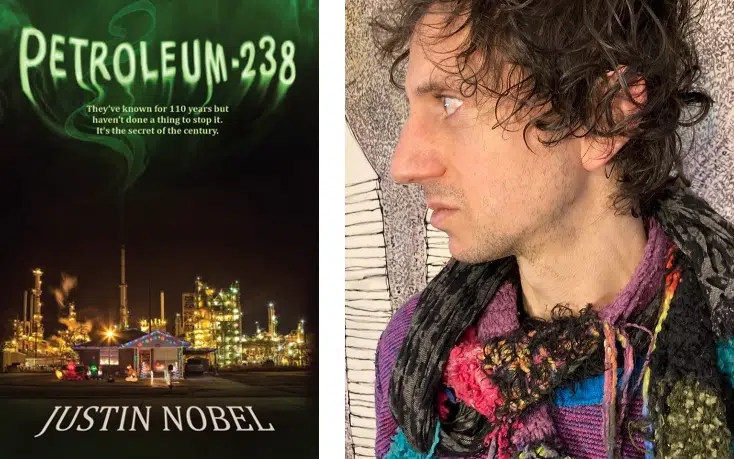
“An exposé of planetary scale.”
~JAMES E. HANSEN  
 
Clearing the PR Pollution that Clouds Climate Science

Desmog Video

You need Flash player 8+ and JavaScript enabled to view this video.


Ashley Braun's blog

Chart: The Deadliest Energy Sources in the World

How deadly is your energy source? The very real and lethal effects of our global energy choices become clear in this interactive data visualization, showing the death rate, as measured by the number of deaths per terawatt hour (TWh), for each of the major global energy sources, e.g., coal, natural gas, oil, nuclear, hydro, peat, and biomass. Take a closer look at the chart here:


Read more: Chart: The Deadliest Energy Sources in the World


Industry Already Protesting EPA's First-Ever Limits on Mercury Pollution

After more than 20 years, the U.S. Environmental Protection Agency (EPA) has finally set federal limits on how much mercury pollution power plants can release into the atmosphere. The fact that the power industry has been able to dump unlimited amounts of mercury and other toxics into the skies (and eventually into the ocean and tuna) without penalty for so long is mind-boggling.

Unless, that is, you ask industry groups and their friends in Congress, who are already parroting the same talking points they bring out every time a new pollution control appears — despite the fact that the Clean Air Act turns out to be a bargain for America over and over again.


Read more: Industry Already Protesting EPA's First-Ever Limits on Mercury Pollution


Coal Power Plants Are Number One ... Source of Toxic Air Pollutants in U.S.

King Coal once again takes the crown for title of dirtiest polluter in the land — or in this case, the air. Coal-burning power plants cough up more hazardous air pollutants than any other source of industrial pollution in the U.S., but it doesn’t have to be that way, says a new report from the American Lung Association (ALA). The report, released March 8, anticipates the U.S. Environmental Protection Agency’s (EPA) expected proposal to reign in this kind of noxious air pollution with a new set of rules for electric utilities, which include coal and oil-fired power plants.

Congress passed amendments to the Clean Air Act way back in 1990 to limit the release of these air pollutants, but for twenty years, the electric utility industry has taken advantage of various loopholes and extensions to avoid cleaning up all facilities in the way other industries have been doing so across the country for years.

It’s time that we end the ‘toxic loophole’ that has allowed coal-burning power plants to operate without any federal limits on emissions of mercury, arsenic, dioxin, acid gases such as hydrogen chloride and other dangerous pollutants,” said ALA president Charles D. Connor in a press release.


Read more: Coal Power Plants Are Number One ... Source of Toxic Air Pollutants in U.S.


Are U.S. House Republicans confusing "Americans" with the "American Petroleum Institute" by cutting pollution protections?

Recent polls confirm that Americans across the country and political spectrum actually do agree on at least one thing: that the U.S. Environmental Protection Agency (EPA) should keep doing its job – and even do more – to set limits on air pollution, including greenhouse gas emissions. Unfortunately, two influential groups feel differently than nearly seven in ten Americans on this issue: Republicans in the House of Representatives and the American Petroleum Institute, a powerful lobbying group representing the oil and gas industry.

The Natural Resources Defense Council (NRDC) and the National Lung Association, who represent environmentalists and American lungs, respectively, each released public polls asking whether EPA scientists or Congress should make decisions about pollution limits. A key finding of the National Lung Association poll was that “voters overwhelmingly oppose Congressional action that impedes EPA from updating clean air standards [PPT].

At the same time, Congressional Republicans are claiming a mandate to cut funding for government programs like the EPA. House Republicans almost unanimously voted to prevent the EPA from doing its job – and specifically from enacting regulations on carbon emissions this year - by cutting EPA’s 2011 budget by $3 billion in the spending bill which passed the U.S. House on February 19, 2011. 

”This is about listening to our country, listening to the people who just elected this Congress to restore discipline with respect to our spending,” Frank Guinta (R-New Hampshire) said during the debate on the budget legislation. But to whom Republicans are listening should perhaps be up for debate.


Read more: Are U.S. House Republicans confusing "Americans" with the "American Petroleum Institute" by cutting pollution protections?


Syndicate content

FOLLOW US!
 
SUBSCRIBE TO OUR E-NEWSLETTER
Get our Top 5 stories in your inbox weekly.
DESMOG TIP JAR
Help us clear the PR pollution that clouds climate science.

About the climate cover-up

About the climate cover-up

Democracy is utterly dependent upon an electorate that is accurately informed. In promoting climate change denial (and often denying their responsibility for doing so) industry has done more than endanger the environment. It has undermined democracy.

There is a vast difference between putting forth a point of view, honestly held, and intentionally sowing the seeds of confusion. Free speech does not include the right to deceive. Deception is not a point of view. And the right to disagree does not include a right to intentionally subvert the public awareness.


www.know-the-number.com

Our Climate is Changing!
Please download Flash Player.