Clearing the PR Pollution that Clouds Climate Science

Desmog Video

You need Flash player 8+ and JavaScript enabled to view this video.


Canada's Oil Sands: $1.4 Trillion Worth of Trouble

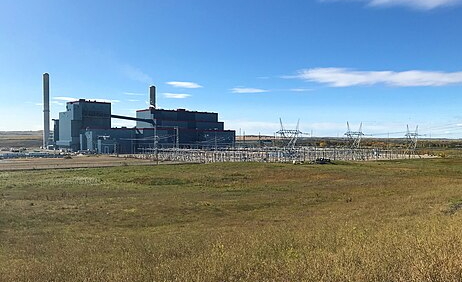
The Canadian tar sand deposit - the largest oil deposit in North America and the second-largest in the world - is worth $1.5 trillion or $34,591 for every man, woman and child in the country, according to the (quite credible) Canadian think tank, the Centre for the Study of Living Standards.

That's one and a half trillion tons of trouble for environmental policymakers in Canada and the United States.

The Canadian tar sand deposit - the largest oil deposit in North America and the second-largest in the world - is worth $1.5 trillion or $34,591 for every man, woman and child in the country, according to the (quite credible) Canadian think tank, the Centre for the Study of Living Standards.

That's one and a half trillion tons of trouble for environmental policymakers in Canada and the United States.

The CSLS report is basically a scold to Statistics Canada, which had been working on a total-value estimate less than one quarter this size. The CSLS conclusion implies a bonanza that much outstrips environmental considerations and other social costs.

But closer reading shows:

  • the social cost of greenhouse gas emissions created in the mining and refining stage is nearly $70 billion.
  • the CSLS ignored the social cost of downstream emissions (accounting for 70 to 80 per cent of GHG output.
  • the CSLSmade no attempt to value environmental damage or social costs not directly related to climate change.

In fairness, the CSLS authors make a nod toward the environment and suggest: "This is an
area that demands further research."

But the paper points to two kind or trouble.

First, there is a fundamental economists' arrogance to the notion that you can attach an accurate dollar value to dirty commodity without having to account for even most of that commodity's potentially devastating social costs.

Second, and more immediately important for policymakers, it shows how much money can be made mining the tar sands - fair warning of how excited oil companies, their employees and the (Canadian) politicians who are so deeply in their debt will be to continue exploiting this resource.

It also points to the problems that President-elect Barack Obama will have if he tries to curtail the purchase of tar-sands oil on the basis that it is a filthy alternative to "light crude" that flows so freely in places like Saudi Arabia and Venuzuela.

As the CSLS notes, the tar sands are "the largest contributor to Canadian emissions growth. Since the early 1990s, output growth in the oil sands sector has been so great that total emissions from this source have increased even as emissions per unit of output (intensity) have declined by as much as 45 per cent. These trends are expected to continue into the foreseeable future and the oil sands are projected to account for 41-47 per cent of 'business-as-usual' Canadian emissions growth between 2003 and 2010."

If Canada and the United States are going to get serious about reducing GHG emissions, it seems obvious that they would start with the biggest and fastest growing point source on the continent. There are, unfortunately, 1.5 trillion reasons why that will be one of the hardest places to make progress.


What's next?

IEA report released

And it is not good. Review the report here

http://www.theoildrum.com/node/4735#more

Social cost

I have a question...how is the "social cost" of greenhouse emissions calculated? Does anyone know what the formula is, and how they decide what the variable are? It would be interesting to know.

vast

Indeed what will be the cost of cleaning up the tailing lakes? Already the largest toxic dump on the planet, with no regulation as to growth and less still as to clean up. The industry is already planning to stop increasing this elephant in the room by using SAGD (steam assisted gravity drainage), a process which removes the necessity of stockpiling the toxins on the surface. But please know, SAGD uses three to four times as much water as surface mining (where all the tailings come from) but leaves all the poisoned water in the aquifer. That's 3 to 4 times as much toxic water left to flow freely underground. To where? Who cares?

Not my back yard.

Indeed, it is almost nobody's back yard, away up there.

"light crude" that flows so freely in places like Saudi Arabia a

Not so fast. It's not flowing so freely anywhere in the world today. If it were, then there would be no need for oil from the tar sands. To get oil from the Saudi deposits one finds that the EROEI is somewhere around 25:1. That is, one unit of energy is needed to get 25 units from their deposits. 50 years ago that number was 100:1.

Compare that to tar sands which is at best 4:1. That means the energy "tax" we have to expend to get tar sands oil is 5 times more expensive than Saudi oil.

You do not go after this dirty high expensive oil for no reason, including the $1.5 Trillion. You do so because you have no choice. Thus the tar sands shows we are at peak oil.

First question about this potential monitary return is how much money is going to be spent extracting the deposit? Some argue it will be bearly breaking even.

The second question about the $1.5 trillion is this the entire deposit only only what it extractable? Only 20% of the entire deposit is extractable. The rest is not because it is too deep. In situ wells will be low volume and have an even worse EROEI and will also only extract a tiny percent of what is not minable.

The fact is IAE on Nov 15th will confirm that we are at peak oil now. Peak oil will have a far more severe, and immediate, impact on the economy, impacting peoples lives, that AGW can ever have.

About the climate cover-up

About the climate cover-up

Democracy is utterly dependant upon an electorate that is accurately informed. In promoting climate change denial (and often denying their responsibility for doing so) industry has done more than endanger the environment. It has undermined democracy.

There is a vast difference between putting forth a point of view, honestly held, and intentionally sowing the seeds of confusion. Free speech does not include the right to deceive. Deception is not a point of view. And the right to disagree does not include a right to intentionally subvert the public awareness.

Although all public relations professionals are bound by a duty to not knowingly mislead the public, some have executed comprehensive campaigns of misinformation on behalf of industry clients on issues ranging from tobacco and asbestos to seat belts.

Lately, these fringe players have turned their efforts to creating confusion about climate change. This PR campaign could not be accomplished without the compliance of media as well as the assent and participation of leaders in government and business.

SUBSCRIBE TO OUR NEWSLETTER

Like what you read here? Get our top five stories in your inbox every week. » here's a preview
Enter your email and subscribe now!

Desmogblog monthly
book give-away

Enter now to win this month’s book Anthony Barnosky's Heatstroke: Nature in an age of global warming

CHECK IT OUT

Join One of DeSmog's Facebook Groups Today!

Join One of DeSmog's Facebook Groups Today!
Did you know DeSmog has some very active Facebook Groups? Check them out:

Friends of DeSmogBlog

The Arctic Front

The Environment is My Voting Issue in Canada

Expedition Earth

Member of the Progressive Bloggers Network

MEMBER OF THE PROGRESSIVE BLOGGERS NETWORK

Progressive Bloggers