
“An exposé of planetary scale.”
~JAMES E. HANSEN  
 
Clearing the PR Pollution that Clouds Climate Science

Desmog Video

You need Flash player 8+ and JavaScript enabled to view this video.


Canadian Carbon Taxes: A lesson in politics overwhelming policy

The current Canadian carbon tax debate is a chilling illustration of how easily political spin can overwhelm serious debate on a complex public policy issue.

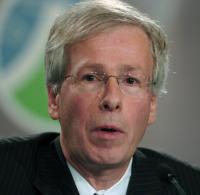
Canadians in two jurisdictions are currently grappling with a carbon tax. In British Columbia, citizens are 10 days away from actually starting to pay a tax imposed by the provincial government - and nationally, Opposition Liberal Party leader Stephane Dion, inset, has just released a wide-ranging climate change policy proposal that includes a carbon tax.

The problem, in both instances, is that the facts of the tax - and the underlying policy consideration it was conceived to address - have been lost in a chorus of simplistic political rhetoric.

That was predictable. From the days when we were all trying to read the lips of George Bush Sr., it has been an article of faith that taxes are bad and new taxes are the worst. It was inevitable that if someone tried to follow the advice of the most progressive energy economists by instituting a carbon levy, the knee-jerk crowd would kick up a fuss. For a representative sample, check out this video of Canadian Prime Minister Stephen Harper responding to the Dion announcement.

Two things have been interesting and, perhaps, less predictable in Canada. First, the (courageous) politicians who proposed these new measures have constantly focused on something other than global warming. In B.C., especially, the right-of-center government has reacted in apparent embarrassment at having suggested that some taxation is appropriate and necessary. Instead of aggressively selling their plan on the basis that intelligent climate change policy is urgently needed, B.C. Liberals have chosen to focus almost exclusively on a series of tax cuts they have included as part of a promise to keep the carbon tax revenue neutral. The headline on their webpage reads: "The BC Carbon Tax: Lowering Taxes, Protecting Our Environment," - as if lowering taxes was the primary goal.

(Who thought this up? And why didn't they market-test it? Any pollster or focus group could have told the Liberals that you might well convince the public that a tax could be revenue neutral, but you'll never convince anyone that the purpose of a new tax is to lower taxes.)

The other interesting and slightly surprising reaction has been the pitched (and sometimes irrational) opposition from the left-leaning New Democratic Party (NDP). It's possible that the NDP's anti-carbon tax position could arise partly because of the strong representation in the party of organized labor - by the kind of once-well-paid union workers who are angry about losing their jobs at recently closed truck plants in central Canada. Like the board members at Exxon Mobil, these are people who go to bed every night hoping that the whole climate change conversation will have ended by morning.

But the NDP's opposition is even more perverse in British Columbia, where the issue has sparked a role reversal. The BC Liberals are usually liberal in name only - unaffiliated with its federal namesake, this party is the kind of West Coast Republican coalition that supports Arnold Schwarzenegger in California. Up till now, Premier Gordon Campbell's BC government has cut taxes more aggressively than any administration in provincial history. The New Democrats, on the other hand, are tax-and-spend liberals in the grand old tradition. When they were driven from power in 2001, they had created a B.C. tax regime that was among the most expensive in Canada.

Now, the Campbell Liberals are slapping on a new tax and the New Democrats are parading around like the newest members of a Milton Friedman club, running an "axe the tax" campaign and offering, as an alternative a "Framework for Real Climate Action." Aside from a series of general complaints about the Liberal environmental record (much of which is fair criticism), this document offers mostly platitudes in answer to the Liberals' very specific anti-carbon measures. The NDP say they would do better, while still decrying this important first step. They say, laughably, that the Campbell plan "undermines the pan-Canadian
approach that we need for … meaningful action," as if the federal government of Conservative Prime Minister Stephen Harper has any intention of cooperating in even the most modest efforts to rein in Canada's production and use of fossil fuels.

This seems unhelpful on two counts. The Liberals, who deserve full praise for taking a position that is, at this moment, the most progressive on the continent, have a huge lead in the polls and the environmental high ground. Why skulk around dodging the climate change topic?

As for the NDP, even if they inflict political damage on their rivals, no anti-tax voter is ever going to switch sides to a party that is, on every other issue, anathema to their beliefs. Even worse, the division between labor lefties and environmentalists has already hobbled the NDP's electoral success. With the rise of the Green Party in B.C., the NDP looks to be running a permanent 10+ per cent deficit in the popular vote. Far from playing the anti-tax card, you would think that the NDP might be trying to shore up its environmental credibility to tempt back those green Green voters.

And speaking of the Green Party, the national version, under leader Elizabeth May, appears to have found a more thoughtful and positive line of carbon-tax criticism. While encouraging the baby steps proposed on June 19 by Liberal leader Stephane Dion (a $15-billion tax shift), May preempted the Liberals on June 18, with a proposal to shift $40 billion in taxes. May points out the inadequacy of Dion's measures without blocking what is currently the best national plan on offer. Of course, Dion and May are already known to have a warm relationship: each has promised not to run candidates in the other's riding during the next election.

On this occasion, Dion says:

Our plan is as powerful as it is simple. We will cut taxes on those things we all want more of such as income, investment and innovation, and we will shift those taxes to what we all want less of: pollution, greenhouse gas emissions and waste.

May says:

The principle behind a carbon tax is simple: stop taxing what we want and start taxing what we don’t want.”

It's almost as if they'd been planning this together.

The one other element of this story that creates a problem for a chronically confused public is the tendency on the part of media to cover the political tactics of the "environmental debate" without actually saying much about the environment or about the policies intended to address it. This Globe and Mail story, for example, is full of analytical spin about Stephane Dion's likely political motives for announcing his GreenShift carbon tax plan. But nowhere does the writer ponder whether Dion might have created the plan because climate change is a problem that any responsible leader would be honor-bound to address, whatever the political consequences.

That might be a point worth reporting. B.C. Premier Campbell and Liberal leader Dion have taken only the smallest of steps here. But they are steps in the right direction. They demonstrate the kind of political courage and directness that everyone always says they want, but voters too often reject at the polls.

With the odd exception (Jeff Simpson, for example), such courage and directness is as hard to find in the media as it is in the halls of political power. Both Campbell and Dion should be proud of their positions and present them without apology. And anyone who does not have an immediate ability to implement something better should cheer them on.


Comment viewing options

Select your preferred way to display the comments and click "Save settings" to activate your changes.

Dion has a death wish and Campbell is no great shakes with his carbon tax in B.C.. The world has been here for billions of years with forest fires and volcanos spewing out billions of tons of carbon dioxide.Campbell is a phony. B.C. ships coal by the tons to China to burn intheir coal powered generators. His days are numbered.

I love it when deniers play the volcano card.

Do tell us, Delano, just how much CO2 is emitted globally by volcanic activity each year, on average.

Never mind, I'll tell you: Less than 1% as much as humans emit from burning fossil fuels, even in a year with a big eruption, such as Mt Pinatubo in 1991.

And forest fires? That's carbon that is already in the active carbon cycle, not fossil carbon that has been locked out of the active cycle for millions of years.

And BC coal shipped to China? You get to blame China for burning BC coal to make all the stuff that Canada imports from China when you stop buying stuff made in China.

"...billions of tons of carbon dioxide..." Delano, how about you provide a source for this figure, just to show you didn't make it up.

Much as this carbon tax is a good idea, much as I would like to believe it will sell, and even though I will vote Liberal for all kinds of reasons, Dion is about as unconvincing a politician as I have ever seen. I have a feeling he is going to be eaten alive in the next election unless he can come out sounding vaguely capable.

This is a very bad scene. The NDP have proven incredibly opportunistic at every turn, shrieking balefully at other left-leaning parties from their perpetual political wilderness, while the Conservatives, with their neocon bully tactics, dare the Liberals time after time with Republican-flavoured legislation to force an election. The bad scene bit in this is that Dion is such a wretchedly poor leader that he looks weak even compared with the astonishingly uncharismatic, evil-seeming Harper. It's almost funny what an amateur he seems to be next to Rae (who I don't particularly like, but hats off to him for his world-class debating and parliamentary skills) and Ignatieff (a total newbie, but a very competent one so far).

So the Liberals seem to me to be led horribly badly and continuously fold when confronted with the need to show some backbone.

I hope this carbon tax flies, that Canadians remember that the current period of governmental surpluses are a Liberal, not Conservative, phenomenon (as McCain pointed out today), and that climate change needs solutions immediately. Or even sooner. But god help us, I don't think Dion could sell this, or much else, if his life depended on it. Even if everyone didn't get the actual content of his proposal all muddied up in the political shitpile we're in right now, Dion would still be at a total loss to communicate this or anything else effectively.

Hoping I'm wrong...

JTK

When did DeSmogBlog go from debunking spin to promoting Liberal spin?

The biggest problem with Dion's carbon tax is that it won't work. Sure it will put a price on carbon, but the tax cuts will insure that nobody is going to have to pay that price. The Liberals know it won't work because their estimates on how much tax revenue this will generate in the fourth year is based on fossil fuel consumption numbers that are higher than 2007's numbers. They also didn't include any estimates on how much of a ghg reduction we'd expect to see; not even so much as a pie in the sky guess. Isn't it rather odd for a socalled green plan not to include such estimates. Even the bogus Conservative plans do that.

As for this preposterous statement, "...what is currently the best national plan on offer." Are you kidding. The NDP's plan and the Green Party's plan are both far superior to anything the Cons or Libs have offered up.

... at least to the point of acknowledging that there is a more coherent plan "on offer" from the Green Party. But, while I think this could well be a ballot box issue in the next election, I don't think it will swing enough votes to elect a Green administration. So, I should have said something like "on offer from a party with an imminent likelihood of being able to implement their plan."

On the quality of the NDP position, I think Jack Layton and company are tying themselves in knots in Ontario by trying to "fight" climate change and support (mostly US-affiliated) auto manufacturing at the same time. And in the West - in BC, at least - the New Democrats are just embarrassing themselves, playing for political points, cuddling up to the anti-tax lobby and, per earlier comments, further alienating the green voters they so desperately need if they are ever to reestablish themselves as a realistic alternative to the now-dominant Liberal coalition. JMHO. 

"It's almost as if they'd been planning this together."

I've read that thought several times this week. The only problem with it is that Tax Shifting has been central to the Green Party platform for the last several elections. It was not planned with the Liberals as they've ridiculed the idea for years now until they decided it was time to adopt is as their own.

Don't get me wrong, I applaud them for doing so, since another consistent feature of the Green Party is that we encourage other parties to adopt and implement our policies.

(If anyone doubts me on this point you can visit http://www.greenparty.ca/visiongreen which was released in the fall of 2007, or somewhere around here I have copies of the 2004 and 2006 election platforms.)

But I do have two concerns with the way the Liberals are doing it.

First, for the Green's, Tax Shifting is an underlying philosophy of economic policy, not merely a one-off policy to address climate change. The fact that the Liberals have adopted a weak version of our policy but not the total philosophy is evidenced by the fact that they will not apply the tax to gasoline. And since a weak version will likely not achieve the desired results, I fear that even should the Liberals get a change to implement it, it will still be seen as failed policy.

Second, only $10 per tonne and not applying to transportation fuels (transportation is, after all, a very large segment of Canada's emissions) indicates that the Liberals still seem to think that there is plenty of time to ease ourselves into addressing climate change. There's not. This is a crisis situation that demands bold leadership. Leadership which is not being provided by either of Canada's largest two political parties.

All that said though, if I can't choose to have the Green policy in place and my only choices continue to be Conservative or Liberal, I'll take the Liberals weak plan over continuing to do the "Baird minimum" any day of the week.

I'll take the Liberals weak plan over continuing to do the "Baird minimum" any day of the week.

Why? The Conservatives' plan to ban incandescent light bulbs will reduce ghg emissions by 4MT. That's 4MT more than Dion's "we'll make you pay...no, not really, wink-wink" carbon tax will accomplish.

This is essentially a repost of a comment I made back in March:
I recommend these urls to anybody who takes this policy issue seriously:
http://tinyurl.com/2tb9cx
that's from the Wall Street Journal; the other one from there that's good is here:
http://tinyurl.com/39ayox ...it's more about carbon taxes being the most efficient tool to transition the economy and lessen the upcoming acute pain caused by peak oil.

Here are some more. These following are not WSJ but are economists in support of carbon tax and shift:
TD Bank: http://tinyurl.com/2uw2m7
Former US Fed Reserve Chairman: http://tinyurl.com/2s246u
Bank of Montreal (among others): http://tinyurl.com/2wfahj
The Economist: http://tinyurl.com/f3mc3
LA Times: http://tinyurl.com/33zvdr
Mark Jaccard: http://thetyee.ca/News/2008/03/06/Jaccard/
Robert Reich: http://tinyurl.com/27w796
Greg Mankiw & other economists: http://tinyurl.com/2985dq

Besides the peak oil thing from WSJ linked earlier, there are some who
think about carbon taxes for other non-AGW-focused reasons. Domestic Job
Creation: http://tinyurl.com/38udtc
and economic stimulation:
http://tinyurl.com/37rojv

The tax shifting the Liberals are proposing is not likely to be the end of their climate policy, although, it may be all, climate-wise, that they campaign on: it depends on what the Conservatives campaign on. Tax shifting is just the tax component of what will have to be a more comprehensive policy. For instance, they'll likely continue the current ethanol expansion and subsidy. They may spend much more money on studying and implementing carbon capture and nuclear energy. There is currently little direct government research on energy, and it is uncoordinated with other research interests in Canada: so policy on changing that situation will have to come to pass. The Conservatives will also likely have plans on direct government spending on energy problems. The Conservatives also promised last election a comprehensive science policy (reform how government funds or subsidizes large ongoing science projects), but they've done absolutely nothing on this issue: in fact, coordination problems have gotten worse. Big science currently cannot be done in Canada.

This story provides some great analysis of the Carbon Tax in Canada. I support the tax here in BC, and welcome any creative initiatives nationally provided they are equally strategic, and as much as possible, revenue neutral. I have not had a chance yet to see Dion's plan, but I'm not surprised about the stance the Tories are taking. It's a shame that instead of choosing to lead on this issue they simply spin.

I've started a Facebook group titled "Axe the Carbon Consumption Tax Axers" aimed at the BC NDP's attack on the tax.

LINK: http://www.facebook.com/group.php?gid=33613321344

The NDP are stooping to cheap politics on this issue, even though many within its own ranks support this kind of tax.

The "Axe the Tax" Facebook group opposing the tax today has over 5000 members. Mine has one. I guess I've got a lot of catching up to do to be anything but a voice in the wilderness. :-)

Comment viewing options

Select your preferred way to display the comments and click "Save settings" to activate your changes.

FOLLOW US!
 
SUBSCRIBE TO OUR E-NEWSLETTER
Get our Top 5 stories in your inbox weekly.
DESMOG TIP JAR
Help us clear the PR pollution that clouds climate science.

About the climate cover-up

About the climate cover-up

Democracy is utterly dependent upon an electorate that is accurately informed. In promoting climate change denial (and often denying their responsibility for doing so) industry has done more than endanger the environment. It has undermined democracy.

There is a vast difference between putting forth a point of view, honestly held, and intentionally sowing the seeds of confusion. Free speech does not include the right to deceive. Deception is not a point of view. And the right to disagree does not include a right to intentionally subvert the public awareness.

www.know-the-number.com

Our Climate is Changing!
Please download Flash Player.