
By Chris Garrard, Co-Director of Culture Unstained
Livelihoods lost and businesses closed overnight. A “slow, inadequate and incomplete” response. The health of a community severely hit. 10 years ago, an infamous moment created a new reality for those living along the US Gulf Coast.
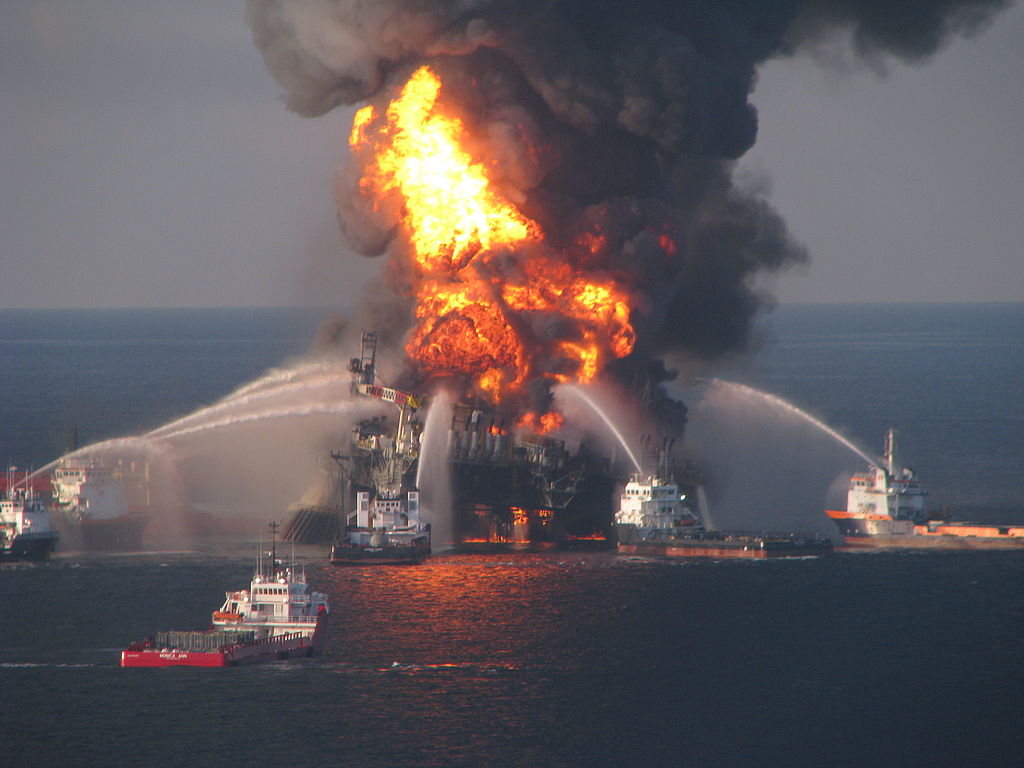
At 9.45pm on Monday 20 April 2010, an explosion occurred on board BP’s Deepwater Horizon drilling platform killing 11 rig workers. A “blowout preventer” – a crucial device designed to shut off the oil well in emergencies – failed, and for the following 87 days, crude oil would flow into the Gulf of Mexico, polluting coastlines, waters and ecosystems.
Vast numbers of birds, turtles, dolphins and other species would be killed. And as attempts to plug the flow repeatedly failed, BP’s then-CEO Tony Hayward would appear on live news to remark that, “there’s no-one who wants this over more than I do. I’d like my life back.”
BP will likely see this 10-year anniversary as an opportunity to draw a line under a disaster that very nearly put the firm out of business. The oil giant would like us to think that both Judge Carl Barbier’s ruling that it had been “grossly negligent” and being issued with the largest criminal and environmental fines in US history are now just footnotes. In reality, they are important reminders of the way BP continues to run its business today.
Like what you’re reading? Donate to DeSmog today!
Helpfully for BP, its new CEO Bernard Looney hasn’t been so tarnished by the fallout from Deepwater Horizon, unlike its previous two leaders. Tony Hayward oversaw the botched response effort, and the recently departed Bob Dudley, attempted to stabilize the company through an approach dubbed “Back to Petroleum”, as he ploughed billions into new fossil fuels just as climate impacts were becoming all the more apparent. Instead, Looney has been free to pose as a climate champion, announcing to fanfare a new “net zero” target – albeit without any real detail on how it will be achieved.
And yet, before becoming CEO, Looney was Head of Exploration and Production under Dudley. In reality, Looney oversaw massive investments in new oil and gas – including in the Gulf of Mexico – where BP is pursuing “ultra-deepwater” drilling that goes far deeper than the ill-fated Macondo well. BP hasn’t backed away from its high-risk search for new oil and gas at all, and Looney played a central role in that agenda for years.
Of course, BP’s Deepwater Horizon disaster wasn’t confined to those three months when crude oil was spilling into the ocean. A new report published last week highlighted how more than 100,000 people were involved in the clean-up efforts, with many later reporting worsening health due to exposure to spilled oil and hazardous cleanup chemicals.
As indigenous Louisianan Cherri Foytlin later commented, “there are a lot more graves in the Gulf of Mexico than there were before, and that’s just the truth.” Tracey Sutton, a biological oceanographer at Nova Southeastern University, has also revealed that, “as of late 2017, as we looked at fishes and shrimp that live in the water column, and we look in their eggs, we’re still finding oil from Deepwater Horizon.”
And, while it was under-reported at the time, the extent of the spill was so vast that oil flowed onto the coastline of Mexico, impacting the lives and livelihoods of those in the fishing industry there too.
BP’s spill in the Gulf was perhaps one of the most vivid examples of how the fossil fuel industry recklessly pollutes lands and water, with little regard for the day-to-day lives of communities. While Deepwater Horizon was a visible, widely reported event, Executive Director of Healthy Gulf Cyn Sarthou has pointed out that there are still “thousands of spills every year. The infrastructure is getting older and we are having more and more problems with it.”
Meanwhile, the fossil fuel industry as a whole is pushing ahead with new pipelines, from Bayou Bridge in Louisiana to Standing Rock in North Dakota. BP in particular is forging ahead with new extraction in West Papua and Argentina, although measures introduced in response to the COVID-19 outbreak may have slowed the company’s ambitions. All these projects have a common thread: resistance led by the Indigenous communities whose lands and waters are at risk.
Today, the oil and gas industry is facing an uncertain future, cutting spending as the global response to the coronavirus pandemic has caused the oil price to plummet. With lockdowns and restrictions in place for the foreseeable future, there’s little sign that the price will stabilise any time soon. 10 years on, BP’s spill in the Gulf of Mexico is a stark reminder that the industry’s reckless pursuit of profit leads to corners being cut, mismanagement and a disregard for the steps climate scientists are urging the industry to take.
Ultimately, this puts workers, communities and the environment at risk. Clarice Friloux of the United Houma Nation in Louisiana puts it starkly: “[The oil industry] came in, they took what they wanted; they took the riches of the land and they left.”
Many on the Gulf Coast believe that another Deepwater Horizon is inevitable because these same patterns exist – it’s only a matter of when. Surely now, when the industry’s future is up in the air, we should call time on the reckless and risky pursuit of oil we can no longer afford to burn. In its place, we can start setting in motion the just transition that we so urgently need.
Image credit: US Coastgaurd/Wikimedia Commons, Public Domain
Subscribe to our newsletter
Stay up to date with DeSmog news and alerts