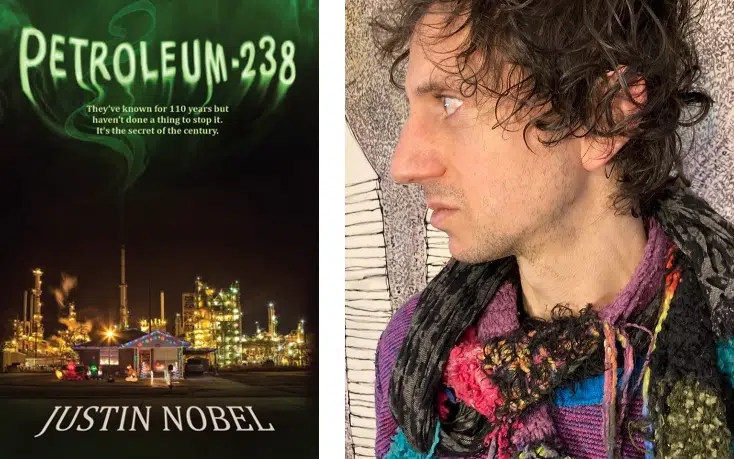
“An exposé of planetary scale.”
~JAMES E. HANSEN  
 
Clearing the PR Pollution that Clouds Climate Science

Desmog Video

You need Flash player 8+ and JavaScript enabled to view this video.


bp

Waterkeeper Groups Sue Over Gulf Oil Leak Gushing For Seven Years And Counting

Like many Gulf Coast residents, I was highly skeptical when both the media and the Coast Guard told us that the tar balls we were seeing wash up on our shores in the months following the Deepwater Horizon oil disaster were not from BP’s oil geyser at the bottom of the Gulf of Mexico. If they weren’t from the massive leak caused by BP, Halliburton, and TransOcean, then where were these tar balls coming from? While we might not know the clear answer to that question, we do have a new suspect.

According to a lawsuit filed this week by the Waterkeeper Alliance and their Gulf Coast affiliates, there is a smaller oil leak in the Gulf of Mexico off the Louisiana coast that has been flowing nonstop for almost seven and a half years. While nowhere near as large as the oil leak from the Deepwater Horizon disaster – the lawsuit estimates the current leak to be releasing a few hundred gallons of oil per day – the fact that it has been flowing for more than seven years allows plenty of time for hundred of thousands, if not low millions, of gallons of oil to be released into the waters of the Gulf of Mexico.

However, the energy company responsible for the leak – Taylor Energy – says that only about 14 gallons of oil are leaking per day. The Waterkeeper Alliance is basing their analysis on the size and scope of visible oil sheens, similar to how the flow rate was determined for the Deepwater Horizon disaster.

The lawsuit alleges that Taylor Energy is responsible for allowing oil to flow into the Gulf, a direct violation of the Clean Water Act. They are seeking civil penalties in the amount of $37,500 per day that the oil has been leaking, the maximum possible penalty for such violations under the Act.

So how has an oil leak managed to go undetected, or at least unreported, for the better part of a decade? That’s one of the questions the lawsuit is hoping to answer.


Read more: Waterkeeper Groups Sue Over Gulf Oil Leak Gushing For Seven Years And Counting


American Petroleum Institute's Jack Gerard Fact Checked By Activists During Speech

Guest post by Connor Gibson, cross-posted from Polluterwatch.

Two days ago, President Obama denied the permit for the destructive Keystone XL tar sands pipeline, much to the dismay of Big Oil's top lobbyist and propagandist. Speaking at the National Press Club to an audience dominated by oil, coal and nuclear representatives and lobbyists, American Petroleum Institute (API) president Jack Gerard continued to lash out at President Obama over the pipeline decision. However, activists attending their event fact checked Jack's big oil talking points.

Shortly after asking the president, "what are you thinking?!" a group of activists stood and delivered a call-and-response "fact check" over Gerard's speech — see the full Fact Check video. After the event, PolluterWatch's Connor Gibson approached Jack Gerard on camera and repeatedly asked him how much the American Petroleum Institute (API) is spending on its new "Vote 4 Energy" advertising campaign (which, as Mr. Gerard has absurdly claimed, is "not an advertising campaign"). Jack refused to answer:

Vote 4 Energy, which was mocked by a parody commercial during its public release, is the American Petroleum Institute's newest money dump to pretend that most Americans support politicians who represent Big Oil more than their own constituents. Wrapping its talking points in patriotic rhetoric, API's real intent is to continue getting billions of taxpayer dollars each year to corporations like ExxonMobil, Shell and Chevron, which rank among the most profitable companies in the world


Read more: American Petroleum Institute's Jack Gerard Fact Checked By Activists During Speech


BP Launches PR Blitz To Repair Image

College football fans aren’t the only ones who’ll be paying close attention to what’s happening in Louisiana this evening – BP is hoping that tonight’s BCS championship game will be the ultimate payoff for their aggressive public relations campaign which is aimed at convincing the American public that the oil from the Deepwater Horizon oil rig disaster has disappeared, and that they can come back to the Gulf Coast without fear of finding oily beaches.

For the last few weeks, those of us on the Gulf Coast have been inundated with ads from BP, telling us that they’ve made good on their promise to clean up the mess from the April 2010 oil rig explosion that released millions of gallons of crude oil into the Gulf of Mexico. This multi-million dollar ad campaign is their last-ditch effort to bring tourism back to the economically-depressed Gulf Coast.


The Associated Press lays out the key elements of BP’s new campaign:


Read more: BP Launches PR Blitz To Repair Image


What We Didn’t Learn From The Deepwater Horizon Disaster

Almost 20 months have passed since the Deepwater Horizon oil rig exploded and spewed millions of gallons of oil into the Gulf of Mexico. And to this day, the lessons we should have learned from that disaster remain completely ignored.

In spite of an intense battle involving a moratorium on deep water oil drilling after the explosion, the Obama administration was out-maneuvered on the issue by the powerful oil industry, losing court battles as well as facing three separate bills in the Republican-controlled House of Representatives to overturn the drilling moratorium. (An interesting side-note about the court battle is that the judge who overturned the ban, Martin Feldman, actually owned stock in Transocean at the time of his decision.)

With oil still washing ashore at the time of the first proposed moratorium, right wing bloggers helped muddy the waters by claiming that the moratorium was devastating Gulf economies. The conservative website Free Republic even posted a video and story about the “Victims of the Obama Drilling Moratorium,” that turned oil companies into the victims as local fishermen and tourist-centered businesses were struggling to make ends meet. Their analysis of the real “victims” was based on “investigations” by oil-funded groups like The Heritage Foundation and the Institute for Energy Research. A commenter on that video had the audacity to claim, “Obama just killed Louisiana more than Katrina.”

But the right wing attacks on the moratorium paid off, and today the deepwater offshore oil industry is once again thriving in the Gulf of Mexico.


Read more: What We Didn’t Learn From The Deepwater Horizon Disaster


Report Partially Blames Federal Government For Deepwater Horizon Oil Rig Explosion

Perhaps one of the most honest assessments of last year’s Deepwater Horizon oil rig explosion reveals the numerous failures of both industry and the federal government in the worst marine oil disaster in U.S. history.

The U.S. Department of the Interior sanctioned the report, compiled by more than a dozen experts operating with the temporary group called the Committee for Analysis of Causes of the Deepwater Horizon Explosion, Fire, and Oil Spill to Identify Measures to Prevent Similar Accidents in the Future (The Committee). And while the experts on The Committee identified failures we’ve documented in the past - particularly the shoddy design of the well’s blowout preventer - the committee highlighted plenty of new information as well.

Noting again that it was sanctioned by the federal government, it's interesting that this was one of the first reports to explicitly implicate the federal government’s irresponsible actions as a cause of the massive oil disaster that followed the explosion:

The regulatory regime was ineffective in addressing the risks of the Macondo well. The actions of the regulators did not display an awareness of the risks or the very narrow margins of safety.

As DeSmog has reported in the past, the federal government’s role in the disaster can be traced all the way back to 2001, when then-Vice President Dick Cheney was holding his secret Energy Task Force meetings with oil industry executives. During those meetings, the industry insiders in attendance helped the Vice President draft legislation that would eviscerate basic health and safety standards that protected workers and the public from the oil industry's reckless practices.


Read more: Report Partially Blames Federal Government For Deepwater Horizon Oil Rig Explosion


BP Returns to Deepwater Offshore Drilling in the Gulf of Mexico

BP, the oil major responsible for the biggest offshore oil disaster in U.S. history, is officially returning to deepwater oil drilling in the Gulf of Mexico. The Obama Interior Department "awarded" BP $27 million worth of leases for oil-and-gas exploration in the Gulf waters into which the company and its accomplices dumped roughly 5 million barrels of oil in April 2010.


The Interior Department conducted its first Gulf lease sale since the BP disaster and announced today the winning bids from 20 different companies totaling $712 million. Adding a strange insult to injury, the lease sale was conducted in New Orleans, home to many fishermen and small business owners whose livelihoods were imperiled by BP's reckless drilling disaster.

In its coverage, BP Awarded $27 Million in Leases for Gulf Oil, Gas Exploration, the National Journal reports that:

BP bid a total of $109.9 million on 15 leases and won 11 for $27.4 million, Interior's Bureau of Ocean Energy Management reported in a list of sales posted on its website.

Interior Secretary Ken Salazar said:

This marks a milestone with respect to the greatest overhaul in the America’s history,” Salazar said of the offshore-drilling safety reforms and changes implemented by Interior since the April 2010 explosion of a BP well in the Gulf led to the worst offshore oil spill in U.S. history. “We believe we can move forward with oil and gas development.”

The only milestone this really marks is the renewed guarantee that the oil industry will continue to destroy the Gulf of Mexico one disaster at a time in its pursuit of dangerous, extreme energy. 


Read more: BP Returns to Deepwater Offshore Drilling in the Gulf of Mexico


Syndicate content

FOLLOW US!
 
SUBSCRIBE TO OUR E-NEWSLETTER
Get our Top 5 stories in your inbox weekly.
DESMOG TIP JAR
Help us clear the PR pollution that clouds climate science.

About the climate cover-up

About the climate cover-up

Democracy is utterly dependent upon an electorate that is accurately informed. In promoting climate change denial (and often denying their responsibility for doing so) industry has done more than endanger the environment. It has undermined democracy.

There is a vast difference between putting forth a point of view, honestly held, and intentionally sowing the seeds of confusion. Free speech does not include the right to deceive. Deception is not a point of view. And the right to disagree does not include a right to intentionally subvert the public awareness.


www.know-the-number.com

Our Climate is Changing!
Please download Flash Player.