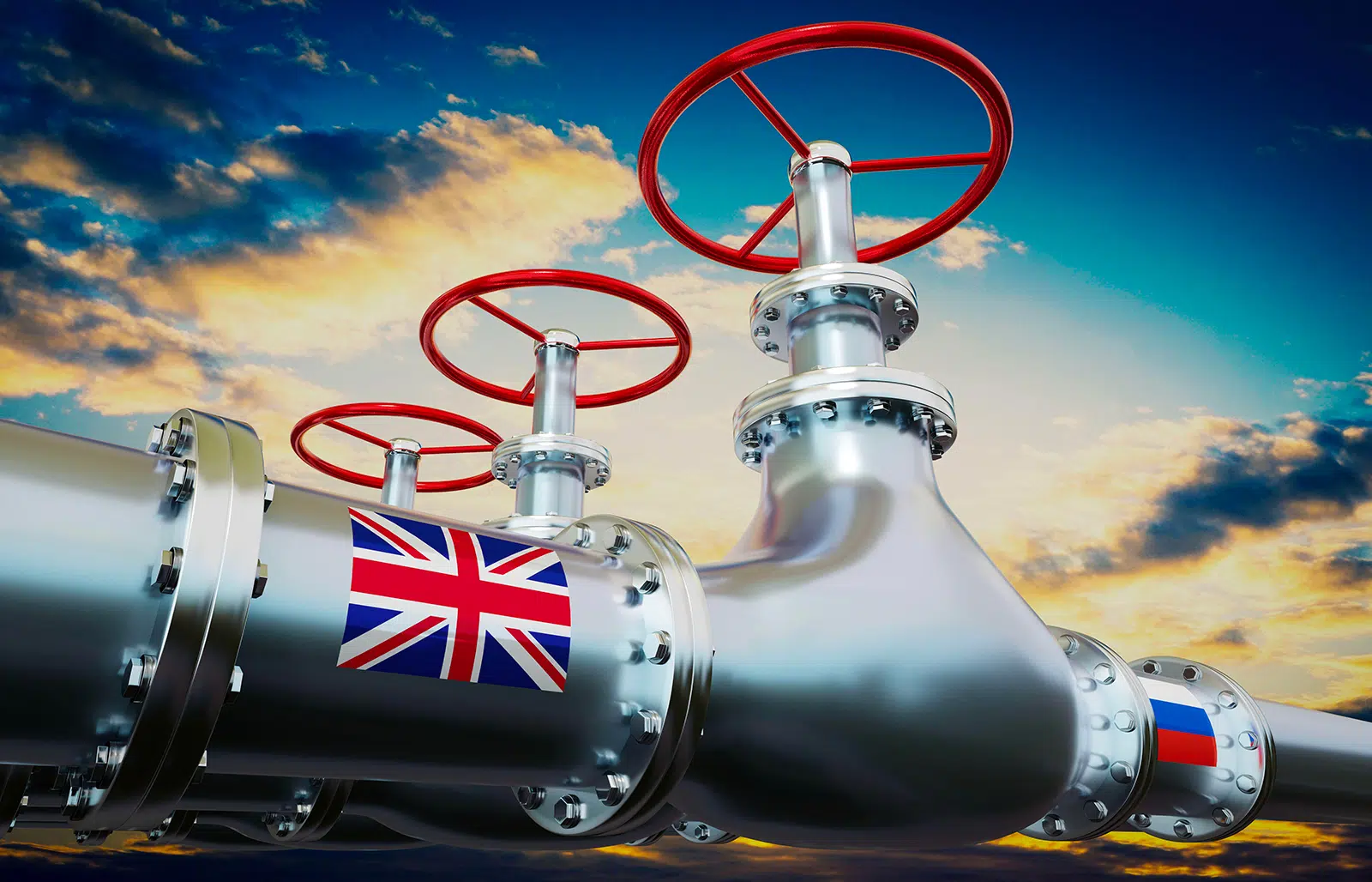
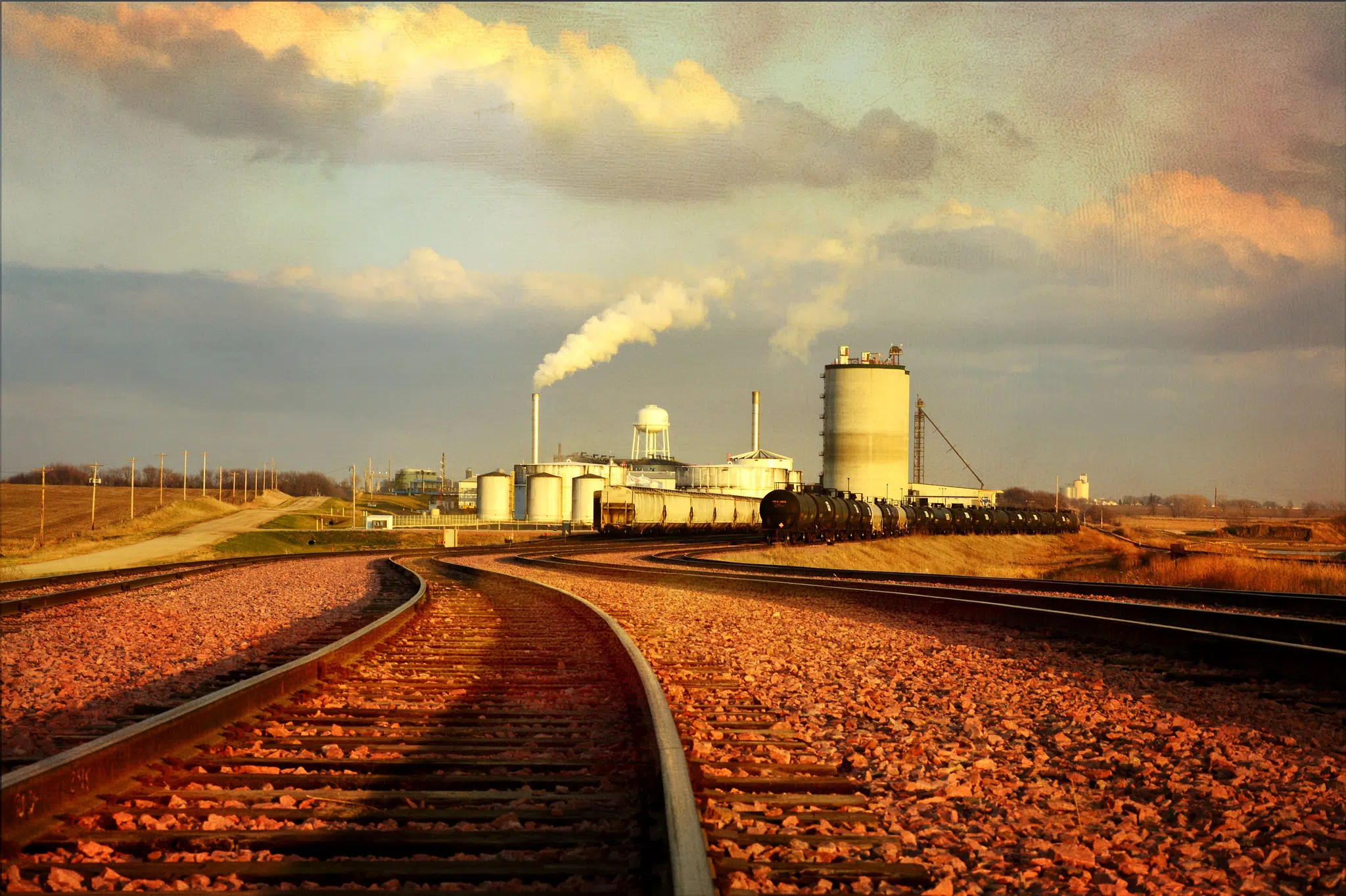
While most European countries are working on a proposal that would effectively ban the use of Canadian tar sands in the European Union, the United Kingdom has made it clear that they will not support any measure to reduce their reliance on tar sands. Britain joins the Netherlands as one of only two countries that want to continue to have the option to use oil derived from Canadian tar sands.
The EU is working to produce a new “fuel directive” this year that would reduce the amount of emissions acceptable from fuels used for transportation. The directive would require a 6% reduction in the amount of emissions from vehicle fuel over the next 9 years. Because the emissions from tar sands run about 23% higher than those from traditional fossil fuels, this would mean that their use in the EU would be effectively prohibited.
In July 2009, Alberta Premier Ed Stelmach created the Premier's Council for Economic Strategy. This 12-member council of various global experts was convened to provide guidance on how the province should maintain its prosperity through 2040. Earlier this month, after nearly two years of research, public meetings and private debate, the experts released their long-awaited scoping report, Shaping Alberta’s Future: Report of the Premier’s Council for Economic Strategy [pdf].
Together they sought to answer [pdf]: “What intentional choices should Albertans be making now to shape our future, the future of our grandchildren and the future of our province?”
According to council Chair David Emerson, a business executive and former federal cabinet minister, the council took a distinctive approach when evaluating Alberta’s future: “Our starting place was a strong conviction that “business-as-usual” is not an option for Alberta.”
Right now, the oil and gas industry is holding its breath as the approval of two major tar sands pipelines hang in the balance. The $13 billion Keystone XL pipeline would significantly increase the Canadian export of of dirty tar sands bitumen to the U.S. by as much as 510,000 barrels a day. And, on this side of the border, the ferociously debated $5.5 billion, 1,170 kilometre Enbridge Northern Gateway pipeline would carry dirty tar sands bitumen to Kitimat, B.C., where it would be loaded onto supertankers bound for growing energy markets in Asia.
As the decisions near, a series of major oil spills in the last year have highlighted the dangers these two pipelines pose, particularly given the major expansion of tar sands production they would enable.
This week, a pump-station equipment failure at a TransCanada pipeline caused 80,000 litres of oil to spill in North Dakota. The Keystone system has suffered 12 leaks since it opened last June, all of them related to equipment failures at pump stations. Despite the frequent spill record, the pipeline is due to resume operations on Saturday.
Canada does not - as yet - export much tar sands oil to Europe. So why, you might ask, have the Canadian and Alberta governments been working overtime using tax dollars to fund a massive misinformation and lobbying campaign on the other side of the Atlantic?
There's a clue in this press release from January announcing Alberta Energy Minister Ron Liepert's $40,000 lobbying jaunts to the US and Europe: "The European Union is not currently a major market for Alberta’s oil sands products, but any legislation or tariffs adopted by the union’s government can serve as a model for individual nations around the world. We want to continue to share our story with the legislators so they have the facts about our clean energy strategies"
(I'll let the "clean energy strategies" rubbish slide for now.)
It's not about protecting existing markets. At the moment the vast majority of exported tar sands oil goes to the US. For the most part, it's not even about securing a regulatory environment in Europe that protects future potential markets (although that is no doubt a contributing factor). I'll tell you why the Canadian and Albertan governments are so worried that they've been applying pressure on European legislators to a degree at least one EU parliamentarian has declared "unacceptable".
TransCanada Corporation is facing another key hurdle in its efforts to obtain State Department approval for its proposed Keystone XL pipeline to deliver dirty tar sands oil from Northern Alberta to Texas refineries in the Gulf of Mexico.
On Friday, the Natural Resources Defense Council (NRDC), the Pipeline Safety Trust, the National Wildlife Federation and the Sierra Club jointly published a new report [pdf] which details the likelihood that there will be leaks and major oil spills into waterways along the pipeline's path.
The report explicitly states how tar sands oil is more corrosive than conventional oil and therefore is a much higher risk to pipeline systems.
Last year, as part of its review of the TransCanada Keystone XL pipeline planned to deliver dirty tar sands oil from Alberta to refineries in the Gulf of Mexico, the Environmental Protection Agency (EPA) found that the carbon emissions from Canadian oil sands crude would be approximately 82% greater than average US crude.
Tar sands oil producers, fossil fuel advocates and Canadian and Alberta politicians were understandably worried about the reputation of their dirty oil. To battle these new facts, these groups have actively engaged in a campaign to greenwash the tar sands by promoting it as "ethical oil". They've even commissioned their own report by the Cambridge Energy Research Associates suggesting that emissions from tar sands oil were only5-15% higher than traditional oil products.
There are few terms in the Canadian vernacular that irk me more than "ethical oil". Since Ezra Levant's 2010 book "Ethical Oil" hit the scene, it's become the favourite language for government newspeak, and the media. Worst of all, its given tar sands proponents and the Conservative Government fodder for their debunked argument that tarsands oil is good for us.
Levant's book looks at the ethical cost of our addiction to oil, and argues that Alberta tar sands oil is more ethically responsible than oil imported from despotic regimes in the Sudan, Russia, and Mexico, where human rights issues are of concern.
Though neither Harper nor our new Minister of Environmental Destruction have read the book, the term was exactly what the Conservatives needed to bolster the much-maligned tar sands. Prior to the echochamber that ensued after the publication of Levant's book, tar sands oil was often characterized as "dirty" and "controversial" - much to the ire of the government.
Levant may well have learned the art of spin early in his career while spending the summer in an internship arranged by the libertarian and clean energy/climate change enemy Charles G. Koch Foundation, or through his work with the Fraser Institute. Levant himself coined the term "ethical oil" in 2009 after being involved in a panel on tar sands oil. The spin doctor finished the 90-minute debate having not managed to convince his audience of the merits of the toxic oil. Without admitting defeat, Levant quickly realized that he was going to have to find a different way to spin the dirty oil apart from economic arguments which just weren't resonating with people.
The U.S. State Department notified a coalition of environmental groups last week that it has denied their Freedom of Information Act (FOIA) request for correspondence between the agency and a former presidential campaign staffer of Hillary Clinton’s, who, in his new role as oil industry lobbyist, is seeking Secretary of State Clinton’s approval for a tar sands oil pipeline.
The State Department denied the FOIA request on the grounds that the groups had not "reasonably described the records [they sought] in a way that someone familiar with Department records and programs could locate them" and cited the groups’ request for a waiver on the fees associated with the processing of the FOIA as reason to deny their request.
Marcie Keever, legal director for Friends of the Earth argues that the State Department did not have legitimate legal grounds to deny the FOIA request.
Thursday afternoon, fire broke out at the Horizon oilsands site near Fort McKay in northern Alberta. Canadian Natural Resources Ltd., which owns the site, confirmed that the fire was set off by an explosion around 5:30 PM Eastern Time Thursday.
The fire itself started in an upgrader across from the plant where bitumen is converted into crude oil. The 480-foot coker structure, which uses heat to convert bitumen into crude oil caught fire. Individuals at the site claimed that the explosion caused flames and smoke to shoot hundreds of feet into the air.
Canada is off to an impressive start at the United Nations Climate Change Conference in Cancun, if what you're measuring is climate inaction and environmental embarrassment.
Today, at the first set of the Fossil of the Day awards, Canada took home not one, or two, but all three of the awards. The dubious 'honour' is voted on by an international coalition of than 400 leading international environmental organizations, including Greenpeace, who vote on the countries that performed the worst during the past day’s negotiations. Turns out if you are really committed to climate inaction, fail to have any plan to meet already weak targets for reducing greenhouse gas emissions, defeat a climate change bill that was already passed in your House of Commons by holding a snap vote by an unelected Senate after no debate, and are complicit in trying to weaken climate policy outside of your own national borders, you can win all three of the humiliating prizes.
The gentleman accepting the shameful awards on behalf of Canada hopped from podium step to podium step, barely able to juggle his armful of awards. Looks like Canada can clean up humiliating awards, but can't clean up its act.
In the next two weeks, we'll see if Canada will take home the Fossil of the Year for the forth year in a row. From the look of things now, we might as well preemptively cue the Jurassic Park theme music.
Watch this hilarious video to see Canada's flagrant lack of commitment to climate change policy given its due recognition. We can only hope that history does not repeat itself once more. Prove us wrong, will you Mr. Baird?
Democracy is utterly dependent upon an electorate that is accurately informed. In promoting climate change denial (and often denying their responsibility for doing so) industry has done more than endanger the environment. It has undermined democracy.
There is a vast difference between putting forth a point of view, honestly held, and intentionally sowing the seeds of confusion. Free speech does not include the right to deceive. Deception is not a point of view. And the right to disagree does not include a right to intentionally subvert the public awareness.