tar sands

Fri, 2012-06-29 10:45Steve Horn
Steve Horn's picture

New Documentary "Rational Middle": Oil and Gas Advertising in Disguise

The "Rational Middle Energy Series," directed and produced by Gregory Kallenberg, is hot off the film rolls and has already been screened at an influential venue: the 2012 Aspen Ideas Festival.

Kallenberg also directed and produced the documentary film "Haynesville: A Nation’s Hunt for An Energy Future," a film about the ongoing shale gas boom in the United States and a counterpart, of sorts, to Josh Fox’s Academy Award-nominated documentary "Gasland."

Kallenberg, in a press release announcing the film series’ launch, stated,

Through our travels with 'Haynesville,' no matter where we were in the world, we saw a striking commonality from community to community: the need and desire for a balanced discussion about today's energy issues. We realized that more often than not, people wanted to leave behind the noise and extremes to build an energy future that is environmentally sound, economically viable and ensures energy security. The 'Rational Middle' is the starting point for a movement welcoming open discussion where everyone is invited to the table to find solutions to the most important energy challenges.

Taken at face value, the movie’s description sounds fairly innocent.

Yet, the questions to be asked as the film makes the rounds: Who is Gregory Kallenberg? Who is his family? And in general, who are the real characters behind the curtain here?

The answers to these questions say much more about the film than does the description offered in promotional pitches. As it turns out, the public relations firm tasked to do promotional pitches also speaks volumes about the filmmaker's agenda.

Tue, 2012-06-26 05:00Carol Linnitt
Carol Linnitt's picture

Maps Show Tar Sands Sprawl in Caribou Habitat: Could Resolve Problem with 1% of Industry Profits, says Scientist

This post is part of DeSmog's investigative series Cry Wolf.

Alberta’s threatened caribou herds will stand a significantly better chance of surviving the province’s development of the Tar Sands, according to a group of scientists, if the oil and gas industry is willing to spare 1 percent of its potential development profits to make it happen.

According to a recent study from the University of Alberta’s Richard Schneider, 50 percent of the caribou habitat threatened by Tar Sands development could be easily preserved if only the industry and government would be more strategic in their land use planning. But ‘strategy’ has had little to do with the way the Tar Sands region has been managed, according to Schneider, who suggests that caribou have become an unintended victim of the government’s thoughtless industrial leasing program.
 
The effort to recover caribou largely relies on securing critical habitat for the species. But habitat has proven difficult to conserve in an area like Fort McMurray where the government has leased the majority of the land to individual companies without any longterm land use strategy. 
 
To understand why caribou recovery is so difficult and why industry is so resistant to habitat protection (see our extensive coverage of this problem here), you have to understand the way oil and gas leases are awarded in Alberta, Schneider told DeSmogBlog. 
 
Fri, 2012-06-22 14:04Meribeth Deen
Meribeth Deen's picture

Enbridge Lobbyists Successfully Eliminated Fish Habitat Protections For Pipeline

Changes to the Fisheries Act limiting the protection of fish habitat did not, as it turns out, arise simply out of a series of complaints by disgruntled farmers hoping to fill in small patches of wetlands or municipalities seeking to repair bridges, as claimed by Minister Keith Ashfield.


Briefing notes obtained by the Access to Information Act show Enbridge found the Department of Fisheries and Oceans (DFO)’s demands “onerous” and, in more than 100 visits with government officials between January and the tabling of amendments to the Fisheries Act, Enbridge lobbyists made clear that they wished to see the department’s regulatory powers limited.

The documents, dug up by Postmedia’s Mike De Souza and Peter O’Neil, show disagreements between DFO and Enbridge occurred over two years, and concerned more than 1,000 waterways on the proposed route of the Northern Gateway Pipeline.


The Conservative budget bill, Bill C-38, has made sweeping changes to the Federal Fisheries Act by eliminating Section 35, which makes it an offense to harmfully alter, disrupt or destroy fish habitat. The regulations which replace Section 35 prohibit “serious harm to fish that are part of a commercial, recreational or aboriginal fishery or fish that support such a fishery.”

Read the story: Federal documents reveal clash between Enbridge, DFO
 

Fri, 2012-06-22 09:34Ben Jervey
Ben Jervey's picture

Trailbreaker Lives: How Plans to Bring Tar Sands Crude to the East Coast are "Going in Reverse"

With efforts to pump tar sands crude south and west coming up against fierce resistance, Canada’s oil industry is making a quiet attempt at an end run to the east.

The industry is growing increasingly desperate to find a coastal port to export tar sands bitumen, especially now that the highly publicized and hotly contested Keystone XL pipeline is stalled, at least temporarily, and the proposed Northern Gateway pipeline project that would move tar sands crude across British Columbia to terminals on Canada’s west coast is running into equally tough opposition.

And by all indications, as laid out in a new report, Going in Reverse: The Tar Sands Threat to Central Canada and New England, by 19 advocacy groups including the Natural Resources Defense Council, Conservation Law Foundation, Greenpeace Canada, the National Wildlife Federation, and 350.org, Enbridge is taking the lead in finding that new outlet.

The company is resuscitating an old industry plan to link the pipeline system in the American Midwest to a coastal terminal in Portland, Maine, traveling through Ontario and Quebec, and then across northern New England. When first proposed in 2008, this project was called Trailbreaker, but Enbridge appears to be avoiding any mention of the former proposal, which spurred quick and firm resistance.

Tue, 2012-06-19 19:31Kevin Grandia
Kevin Grandia's picture

I Love You Huffpo but What's Going On?

I have been writing on environmental issues on the popular news blog Huffington Post going on five years now but I am not sure if I will continue.

In an article today about yet another oil pipeline burst in the Northern Alberta tar sands, the editors of the Huffpo Canada section included a shiny happy "slideshow" at the end touting all the upsides of this massively destructive industry. 

It is blatant spin with factoids like: "Alberta will reap $1.2 trillion from oil sands" (leaving out the next part about the fact that emissions will triple in the same number of years):

Fri, 2012-06-15 12:56Carol Linnitt
Carol Linnitt's picture

Terror is in the Eye of the Beholder: Alberta’s Counterterrorism Unit to Protect Oil and Gas Industry

In January, during the week before Canada’s federal hearing on the Enbridge Northern Gateway Pipeline, the Harper government and Ethical Oil Institute launched an unprecedented attack on environmental organizations opposed to the pipeline and accelerated expansion of the tar sands. Resurrecting Cold War-style ‘terrorist’ rhetoric, conservative politicians like Natural Resources Minister Joe Oliver referred to prominent environmental organizations as “radical groups” threatening “to hijack our regulatory system to achieve their radical ideological agenda” while using “funding from foreign special interests groups to undermine Canada’s national economic interest.”

The government and Ethical Oil singled out environmental organizations like the Sierra Club, ForestEthics, and the Pembina Institute, in an orchestrated effort to undermine the credibility of pipeline opponents and to cast doubt on their intentions for the Enbridge Pipeline hearings. 
 
The rhetorical campaign against these alleged ‘environmental extremists’ moved from propaganda to policy last week when the RCMP announced the creation of a new counterterrorism unit in Alberta, designed to protect Canada’s energy infrastructure from so-called ‘security threats.’
Wed, 2012-06-06 08:36Steve Horn
Steve Horn's picture

TransCanada's Latest Extreme Energy Export Pipelines in the U.S. and Canada

TransCanada was once in the limelight and targeted for its Keystone XL pipeline project. Now, with few eyes watching, it is pushing along two key pipeline projects that would bring two respective forms of what energy geopolitics scholar Michael Klare calls "extreme energy" to lucrative export markets.

Pipeline one: the southern segment of the originally proposed TransCanada Keystone XL tar sands pipeline, popularly referred to as the Cushing Extension, but officially referred to as either the Gulf Coast Project or the Cushing Marketlink pipeline. This pipeline will carry tar sands crude, or "dilbit," extracted from Alberta, Canada's Athabasca oil sands project southward first to Cushing, Oklahoma, and then to Port Arthur, Texas, where it will be shipped off to global export markets.

While the northern Alberta-to-Cushing segment has been punted until after election season by President Barack Obama's U.S. State Department, the Cushing-Port Arthur segment has been rammed through in a secrective manner by various Obama regulatory agencies, as pointed out recently by Friends of the Earth-U.S. (FOE-U.S.). 

FOE-U.S. explained in a long blog post published on June 5, well worth reading in its entirity,

Tue, 2012-05-15 17:24Guest
Guest's picture

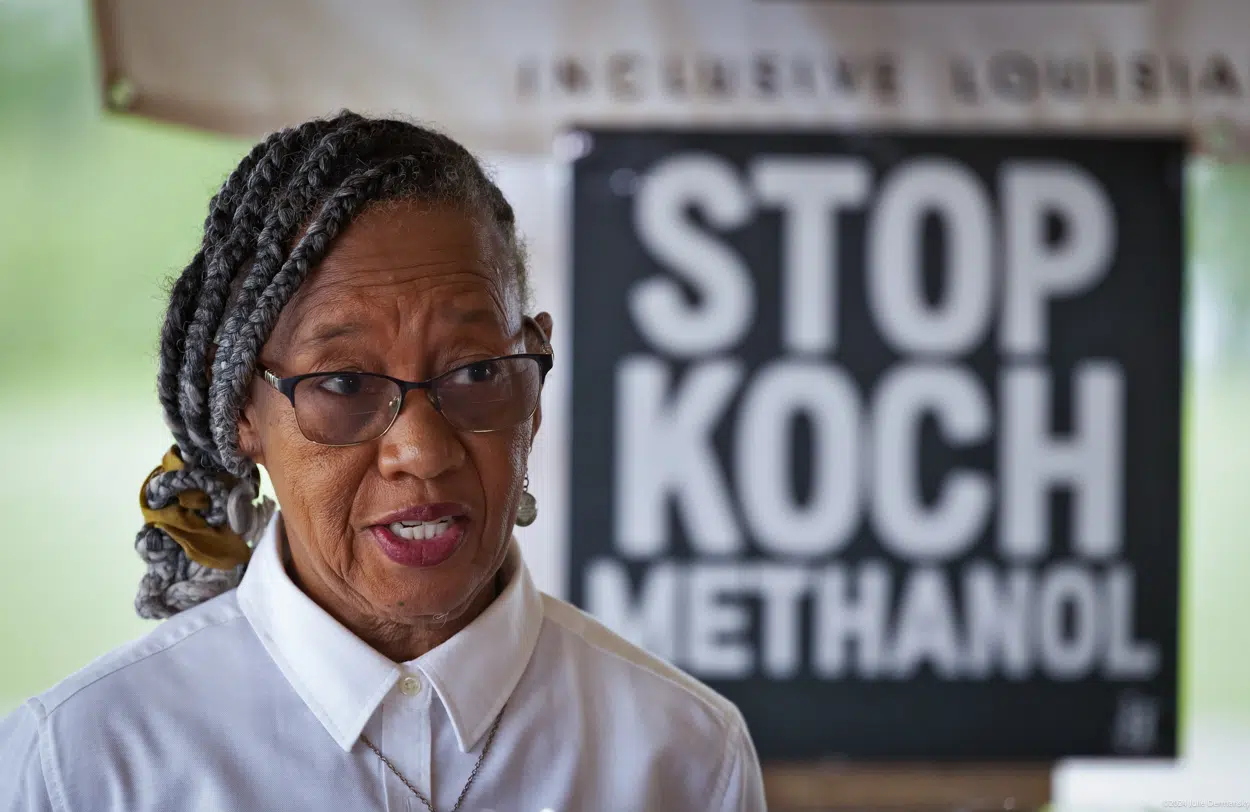
Koch "Facts" Flummoxed Over Undeniable Tar Sands Business, Keystone XL Interest

Authored by Connor Gibson, cross-posted with permission from PolluterWatch.org

For those who missed the deep investigative piece published by InsideClimate News last week documenting a half-century of Koch Industries involvement in the destructive tar sands of Alberta, Canada, it has finally closed the coffin on a vicious round of lies straight from Koch Industries.

Through its aggressive KochFacts PR website, Koch lawyers, lobbyists and communications advisors hammered InsideClimate for its initial reports on the Koch connection to tar sands and the Keystone XL pipeline, specifically attacking the outlet's publisher and calling the reporting "deceptive," "untrue" and "utterly false," among other claims that, ironically, are deceptive, untrue and utterly false.

A major indicator of InsideClimate's diligence is the response from KochFacts this time around, which mentions nothing of InsideClimate's damning new documentation of ongoing Koch operations in the tar sands, including the following points from the article:

• The company is one Canada's largest crude oil purchasers, shippers and exporters, with more than 130 crude oil customers.

• It is among the largest U.S. refiners of oil sands crude, responsible for about 25 percent of imports.

• It is one of the largest holders of mineral leases in Alberta, where most of Canada's tar sands deposits are located.

• It has its name attached to hundreds of well sites across Alberta tracked by Canadian regulators.

• It owns pipelines in Minnesota and Wisconsin that import western Canadian crude to U.S. refineries and also distribute finished products to customers.

• It owns and operates a 675,000 barrel oil terminal in Hardisty, Alberta, a major tar sands export hub.

• And this year it kicked off a 10,000 barrel-a-day mining project in Alberta that could be the seed of a much larger project.

Pages

Subscribe to tar sands