fracking

Tue, 2012-07-10 10:16Steve Horn
Steve Horn's picture

Oil Sands Fact Check: New API Front Group

How do you sell a rotten bag of goods? Rule number one of effective propaganda: repackage it into something seemingly less grotesque.

In that spirit, the Houston Chronicle recently reported the American Petroleum Institute (API) has created yet another front group, this one to promote tar sands crude, one of the dirtiest sources of fuel in the world, as a safe and secure energy resource.

It's name? "Oil Sands Fact Check" (OSFC).

Sat, 2012-07-07 08:00Farron Cousins
Farron Cousins's picture

What To Expect When You’re Electing: President Barack Obama

Part 3 in a series, see Part 1 and Part 2.

Perhaps more than any other sitting U.S. President, Barack Obama has been Commander in Chief through some of the most obvious examples of what climate change will do to America. The last few weeks alone have given us severe droughts in some areas of the country while others have seen unprecedented flooding; The state of Colorado is battling some of the worst wildfires in their history; and massive heat waves are engulfing large swaths of America. And let’s not forget the massive snowstorms in the winter of 2010 – 2011.

Then there were the manmade environmental atrocities like the BP oil geyser in the Gulf of Mexico, the deadly Massey Upper Big Branch mine disaster, the Kalamazoo River tar sands spill, fracking-induced earthquakes in Ohio, water contamination from unconventional oil and gas drilling – the list could go on and on.

So in the face of these disasters, how has President Obama fared on environmental issues? Let’s take a look.

In 2008, then-candidate Obama told supporters that if elected, he would set a goal of an 80% reduction in carbon emissions by the year 2050. He acknowledged that man-made climate change was a real threat to America, and signaled a change in policy from the previous administration. Voters, especially environmentally conscious voters, were relieved to finally hear a candidate expressing such bold goals for the country.
 

Fri, 2012-07-06 03:00Steve Horn
Steve Horn's picture

EOG Resources: The Gas Corporation That Does It All From Cradle to Grave

DeSmogBlog, on multiple occasions, has reported that the damage caused by hydraulic fracturing, or "fracking" in the unconventional oil and gas industry goes far beyond water contamination, put in the spotlight by the documentary film "Gasland." The multi-pronged harms were tackled in a comprehensive manner in our report, "Fracking the Future."

One corporation in particular, EOG Resources, epitomizes the shale gas lifecycle from cradle to grave and the damage it is causing in communities worldwide. 

Who is EOG? The Artist Formerly Known as Enron

EOG Resources -- owned by CEO Mark Papa -- is the born again sibling of the now disgraced corporation, Enron Oil and Gas, hence "EOG." It is headquarted in Houston, TX.

Former President and Chief Opearing Officer of Enron, Richard Kinder, recently referred to by The Wall Street Journal as "The Luckiest Ex-Enron Employee," now co-owns oil and gas industry pipeline giant, Kinder Morgan

After the fall of Enron, Kinder Morgan purchased Enron's pipeline assets and built up the Kinder Morgan behemoth into what it is today, the corporation with the most extensive array of pipelines in North America.

Tue, 2012-07-03 15:51Ben Jervey
Ben Jervey's picture

Bloomberg Stunner: How Chesapeake Energy Paid Less Than a 1% Tax Rate On $5.5 Billion in Profits

Chesapeake Energy, a company that is no stranger to financial scandals, has found itself on the front page of the financial papers again. This time, the subject is taxes. Or how Chesapeake barely pays them.  

Over its 23-year history, Chesapeake Energy, the second largest producer of natural gas in the U.S., and the company described by its founder and CEO Aubrey McClendon as “the biggest frackers in the world,” has earned roughly $5.5 billion in pre-tax profits. To date, the company has paid $53 million in taxes. That’s an effective tax rate of under 1 percent - a massive taxpayer subsidy.

The corporate income tax rate in the U.S. is 35 percent. 

The Bloomberg article that exposed these stunning figures is quick to note that this is far less than the 12 percent rate that GE paid in 2010 that caused such public outrage, and even a tiny percentage of the 18 percent effective rate that Google had to answer for.

So how does Chesapeake pull this off? Mostly, it’s due to a rule written in 1916 that allows oil and gas producers to, according to Bloomberg, “postpone income taxes in recognition of the inherent risk of drilling wells that may turn out to be dry.

The break may be outdated for companies such as Chesapeake, which, thanks to advances in technology, struck oil or gas in 99.6 percent of its wells last year.“ When the policy was written, drillers struck “dry wells” roughly 80 percent of the time.

Sat, 2012-06-30 08:00Brendan DeMelle
Brendan DeMelle's picture

Aspen Ideas Festival Fracking Debate Livestream - Tune in Sunday

This Sunday, July 1, FORA.tv is hosting a free, online debate at the Aspen Ideas Festival, "No Fracking Way: Is The Natural Gas Boom Doing More Harm Than Good?"

The debate will feature Deborah Goldberg and Katherine Hudson arguing for the motion, Joe Nocera and Susan Tierney arguing against. (See below for brief bios.)

The debate will be streaming live online at 6pm PDT (3pm EDT), and you can tune in here at DeSmogBlog to watch as well.


Fri, 2012-06-29 10:47Steve Horn
Steve Horn's picture

Sand Land: Frac Sand Mining in Western Wisconsin - Video Report by DeSmogBlog

The rush to drill for unconventional gas, enabled by a process popularly known as "fracking," or hydraulic fracturing, has brought with it much collateral damage. Close observers know about contaminated water, earthquakes, and climate change impacts of the shale gas boom, but few look at the entire life cycle of fracking from cradle to grave.

Until recently, one of the most underlooked facets of the industry was the "cradle" portion of the shale gas lifecycle: frac sand mining in the hills of northwestern Wisconsin and bordering eastern Minnesota, areas now serving as the epicenter of the frac sand mining world.

The silence on the issue ended after several good investigative stories were produced by outlets in the past year or so, such as Wisconsin WatchPR WatchThe Wisconsin State Journal, the Associated PressThe Wall Street JournalOrionEcoWatch, and most recently, Tom Dispatch. These various articles, all well worth reading, explain the land grab currently unfolding in the Midwest and the ecological damage that has accompanied it

To put it bluntly, there could be no shale gas extraction without the sand. As Tom Dispatch's Ellen Cantarow recently explained,

That sand, which props open fractures in the shale, has to come from somewhere. Without it, the fracking industry would grind to a halt. So big multinational corporations are descending on this bucolic region to cart off its prehistoric sand, which will later be forcefully injected into the earth elsewhere across the country to produce more natural gas. Geology that has taken millions of years to form is now being transformed into part of a system, a machine, helping to drive global climate change.

Frac sand, which consists of fine-grained sillica, can cause the respiratory illness, silicosis. Washing the frac sand in preparation for the fracking process is also a water intensive process, particularly threatening in the age of increasing water scarcity in the United States and around the world.

Stay tuned for much more to come from DeSmogBlog on one particularly powerful sand-mining corporation, EOG Resources, formerly known as the now infamous Enron Oil and Gas, a little explored fossil fuel industry giant that does it all: frac sand miningfrackingpipelines, and LNG terminals.

Image credit: Sara Jerving | PRWatch


Fri, 2012-06-29 07:00Farron Cousins
Farron Cousins's picture

What To Expect When You’re Electing: Part 1 – What’s At Stake

Environmental and energy issues became one of the central issues of the 2008 U.S. presidential election. While the economy itself took center stage, energy issues were right behind it, being pushed by the insufferable chant of “Drill baby drill.” In the four years that have followed, the U.S. has seen a boom in hydraulic fracturing (fracking), the worst oil spill in our history, skyrocketing (and then plummeting) gas prices, a disastrous oil pipeline plan that threatens the safety of our aquifers, and a Republican-led assault on environmental safety standards.

With all of these issues weighing heavily in the mind of the American public, there’s no doubt that both energy policy and environmental concerns will once again play an important role in the 2012 election cycle.

To help educate those voters concerned about the environmental policies and histories of the 2012 candidates, we’re putting together a multi-part series “What to Expect When You’re Electing,” and we will discuss the statements, policies, positions, and industry money received by both major presidential candidates, as well as those seeking lower offices.

Thu, 2012-06-28 16:58Guest
Guest's picture

Exxon's Tillerson: Could We Really Have Expected a Tiger to Change its Stripes?

By Cindy Baxter, originally published at PolluterWatch.org.

When Greenpeace first began focussing on ExxonMobil's funding of climate denial, its CEO and Chairman was arch denier Lee Raymond.

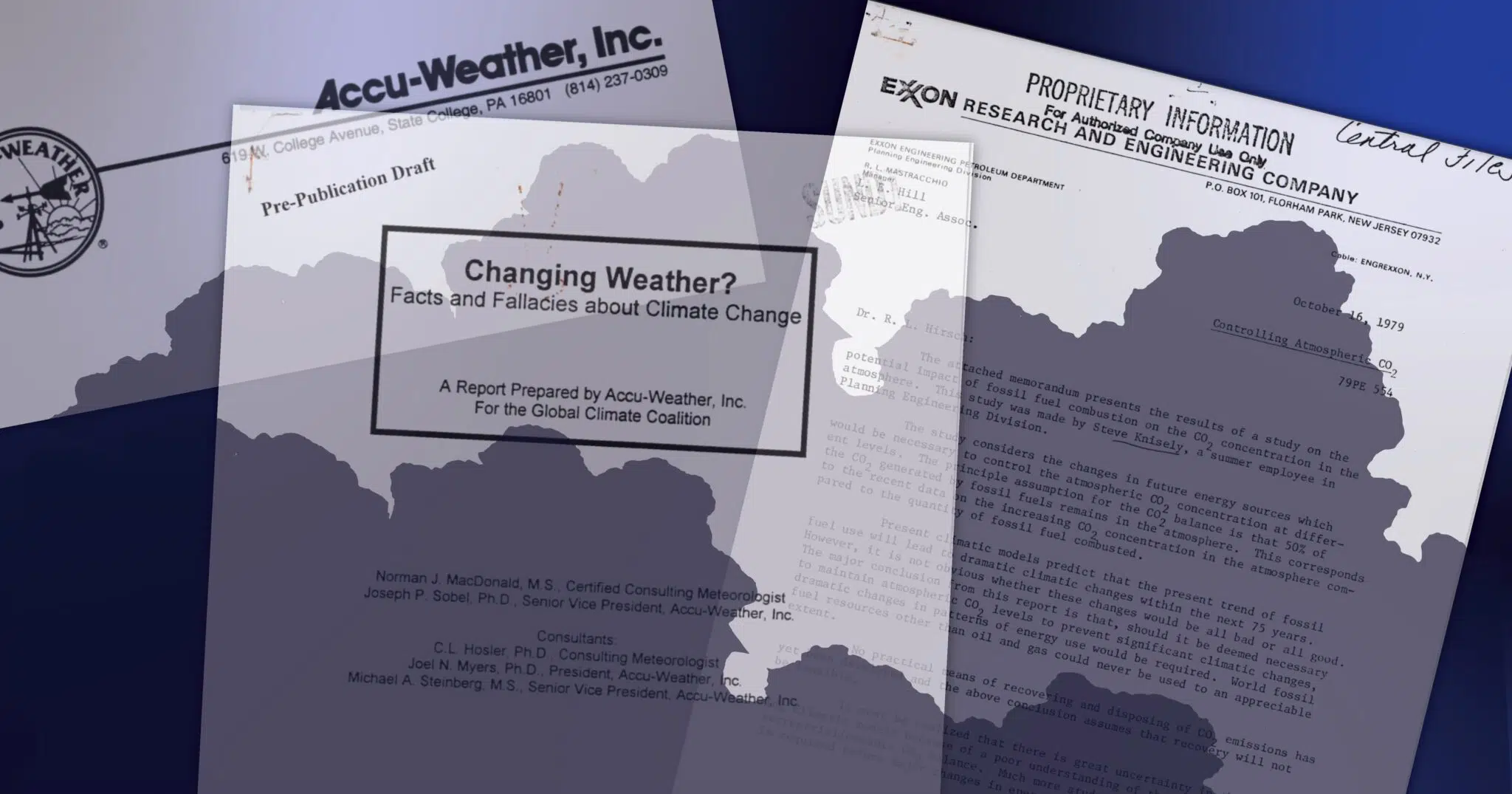
Raymond had spent years - and millions - on denying the science of climate change, both in funding right wing think tanks and scientists, and in his role as chair of the American Petroleum Institute's climate change committee.  A 1998 document revealed ExxonMobil plotting with some of those think tanks to challenge climate science. 

For years, Exxon had paid for expensive, weekly "Opinion Advertorials" on the New York Times opinion pages challenging the science (see image).

When Raymond stepped down and Rex Tillerson  took over in 2006, we hoped the worst was over.  That year, ExxonMobil dropped its funding of the Competitive Enterprise Institute that ran the charmingly titled "Cooler Heads Coalition". The final straw for ExxonMobil was the CEI's "C02 is life" advert (this links to an annotated version, but it's the original ad) positing that we couldn't get enough of the stuff.  

In dropping the CEI, ExxonMobil told everyone it had been "misunderstood" on its stance on climate change - and the media were led to believe that this tiger had changed its stripes. Its "Corporate Responsibility report" that year stated it was dropping its funding of a few think tanks because their "‘position on climate change diverted attention from the important discussion on how the world will secure the energy required for economic growth in an environmentally responsible manner."

And yet, the company continued to fund deniers and does to this day. As of May last year, Exxon has poured a total of $26,061,235 into the campaign against climate denial.  While the funding in 2010 was just above $1 million, well down from its 2005 peak of $3.478 million, in 2010 Exxon started funding one of the think tanks that it had dropped and arguably the first off the blocks in the climate denial campaign, the George C Marshall Institute.  The Koch brothers have taken up where Exxon left off, but its legacy is clear.

Wed, 2012-06-27 22:09Brendan DeMelle
Brendan DeMelle's picture

Fracking Industry Enjoyed Privileged Access To Controversial New York DEC Environmental Review

Documents obtained by the Environmental Working Group (EWG) show that bureaucrats within the New York Department of Environmental Conservation (NY DEC) granted the oil and gas industry premature access to highly controversial draft regulations for shale gas fracking in the state. New York placed a moratorium on hydraulic fracturing for gas in order to evaluate the science on the risks posed to drinking water, air quality and the health of New York's citizens and the environment. 

The documents, obtained by EWG through New York's Freedom of Information Law, show that the fracking industry received an unfair advantage thanks to DEC officials who provided detailed summaries of their proposed rules exclusively to oil and gas industry representatives. This allowed industry a six-week head start to lobby state officials to weaken the proposed standards before the public was granted access to the plan.

Of particular concern, a lobbyist for scandal-ridden gas giant Chesapeake Energy used the exclusive access to the draft Supplemental Generic Environmental Impact Statement (SGEIS) to attempt to weaken the proposed rules restricting discharges of radioactive wastewater.

Thomas West, a prominent oil and gas industry lobbyist representing Chesapeake and other industry clients, made "one last pitch" -- in an email to DEC Deputy Commissioner and General Counsel Steven Russo -- to "reduce or eliminate radionuclide testing" of fluids that could migrate from drilling sites during storms, according to the documents.

NY DEC has previously found concentrations of cancer-causing radioactive pollution at shale gas drilling sites that exceeded safe drinking water standards by hundreds of times or more, according to EWG's report "Inside Track: Cuomo Team Gives Drillers Jump Start to Influence Fracking Rules." 

"This is like giving the drilling industry three laps around the track while everyone else was left waiting on the starting block," said Thomas Cluderay, EWG assistant general counsel. "The public needs to know whether New York regulators compromised the integrity of the state's drilling plan months ago, despite promises of keeping the process fair and transparent."

Fri, 2012-06-22 11:48Carol Linnitt
Carol Linnitt's picture

American Nurses Band Together to Expose Health Risks of Fracking and Fossil Fuel Energy

Nurses from the Pennsylvania State Nurses Association (PSNA) are proposing they take on a more prominent role in connecting the dots between human health and fossil fuel-based energy. Their public policy proposal, “Nurses Role in Recognizing, Education and Advocating for Healthier Energy Choices,” was passed by the American Nurses Association (ANA) House of Delegates last week. Developed in Pennsylvania, one of North America’s fracking hotspots, the proposal suggests nurses take on an educational role, acting as a conduit between those affected by energy pollution and medical professionals.

“Human and ecological health risks are directly related to the use of coal-fired power plants, mountaintop removal of coal, offshore and onshore oil and natural gas drilling, and hydraulic fracturing, or ‘fracking,’” the PSNA writes in a press release. The nurses association proposes nurses use “evidence-based information to educate other health professionals, the public and policy makers about the relationship between energy choices and human health.”
 
This proposal arises in response to a recent ‘muzzling’ of medical professionals in Pennsylvania where new laws prevent doctors from relaying information to patients affected by fracking chemicals. In Pennsylvania doctors are legally bound to protect the confidentiality of proprietary chemical information protected as a trade secret by fracking companies.
 

Pages

Subscribe to fracking