fracking

Sat, 2012-07-28 06:00Steve Horn
Steve Horn's picture

The Real Train Wreck: ALEC and "Other ALECs" Attack EPA Regulations

When business-friendly bills and resolutions spread like wildfire in statehouses nationwide calling for something as far-fetched as a halt to EPA regulations on greenhouse gas emissions, ALEC is always a safe bet for a good place to look for their origin.

In the midst of hosting its 39th Annual Meeting this week in Salt Lake City, Utah, the American Legislative Exchange Council (ALEC) is appropriately described as an ideologically conservative "corporate bill mill" by the Center for Media and Democracy, the overseer of the ALEC Exposed project. 98 percent of ALEC's funding comes from corporations, according to CMD.

ALEC's meetings bring together corporate lobbyists and state legislators to schmooze and then vote on what it calls "model bills." Lobbyists, as CMD explains, have a "voice and a vote in shaping policy." In short, they have de facto veto power over whether the prospective bills they present at these conferences become "models" that will be distributed to the offices of politicians in statehouses nationwide.

For a concise version of how ALEC operates, see the brand new video below by Mark Fiore.

ALEC, though, isn't the only group singing this tune.

As it turns out, one of the "Other ALECs," or a group that operates in a similar manner to ALEC, will be hosting its conference in the immediate aftermath of ALEC's conference: the Council of State Government's (CSG) regional offshoot, the Southern Leadership Conference (SLC).

Like ALEC, CSG produces its own "model bills," which it calls "Suggested State Legislation" (SSL). SSL is enacted via an "up or down" vote manner at CSG's national meetings. This process mirrors that of its cousin ALEC, with corporate lobbyists also able to vote in closed door meetings.

Some key differences between CSG and ALEC: the former is bipartisan in nature, while the latter is Republican Party-centric; CSG has a far larger budget, due to the fact that 43 percent of its funding comes from taxpayer contributions; and CSG is not explicitly ideological in nature because it was founded as a trade association for state legislators (not as a corporate front group like ALEC, although CSG is now heavily influenced by the same forces).

SLC's annual meeting will be held in Charleston, West Virginia from July 28-31.

TruthOut's ongoing "Other ALECs Exposed" series (written by yours truly) digs deep into the machinations of "Other ALEC"-like groups.

One of the key threads tying these two particular groups together is their agreement on derailing what they describe as "job-killing" EPA greenhouse gas emissions regulations. ALEC has referred to these sensible standards on multiple occassions as a "Regulatory Trainwreck."

ALEC, SLC and EPA "Regulatory Trainwreck" Resolutions

ALEC's "Regulatory Trainwreck" Resolution

ALEC has two model bills on the books that call for EPA regulations to be eliminated: the State Regulatory Responsibility Act and the Resolution Opposing EPA’s Regulatory Train Wreck. Essentially clones, the two bills passed nearly a decade apart from one another, the former in 2000, the latter in 2011.

ALEC's description of EPA regulations reads like the apocolypse is looming.

"The U.S. Environmental Protection Agency has begun a war on the American standard of living," it wrote. "During the past couple of years, the Agency has undertaken the most expansive regulatory assault in history on the production and distribution of affordable and reliable energy...These regulations are causing the shutdown of power plants across the nation, forcing electricity generation off of coal, destroying jobs, raising energy costs, and decreasing reliability."  

Former CMD reporter Jill Richardson wrote in a July 2011 story that the concept behind the resolution originated at ALEC's December 2010 policy summit. Richardson explained,

The policy summit included a session led by Peter Glaser of Troutman Sanders LLP law firm in which Glaser, an attorney who represents electric utility, mining and other energy industry companies and associations on environmental regulation, specifically in the area of air quality and global climate change, told the crowd that "EPA's regulatory trainwreck" is "a term that's now in common use around town. I think everybody should become familiar with it." (See the video here.) Along with the presentations, ALEC published a report called "EPA's Regulatory Trainwreck: Strategies for State Legislators" and provided "Legislation to Consider" on its site, RegulatoryTrainwreck.com. For the public, they created the website StopTheTrainwreck.com.

The Resolution calls for the EPA to stop regulating greenhouse gases for the next two years as a "jobs creation" mechanism.

After the midterm election ransacking, in which the GOP won large majorities in state legislatures nationwide, it was off to the races for "Regulatory Train Wreck" resolutions to pass around the country, and pass they did. 

The "Regulatory Trainwreck" resolution, according to ALEC, has been introduced in an astounding 34 states, passing in 13, as of a June 2011 press release.

This assault conducted by ALEC and its corporate backers is merely the tip of the iceberg. ALEC itself boasts,

There are 27 groups of state and local officials that opposerecent EPA action, including tens of thousands of state legislators, utility commissioners, agricultural department officials, foresters, drinking water administrators, fish and wildlife agencies, solid waste management officials, state wetland managers, mayors, counties, and cities.

One of these 27 groups included CSG's Southern Leadership Conference.

SLC Adopts the "Regulatory Train Wreck" Resolution as its Own

On July 19, 2011, the SLC adopted the ALEC Regulatory Train Wreck resolution at its 65th Annual Meeting in Memphis, TN. The Resolution called for, among other things, to

  1. "Adopt legislation prohibiting the EPA from further regulating greenhouse gas emissions for the next 24 months, including, if necessary, defunding the EPA greenhouse gas regulatory activity;"
  2. "Impose a moratorium on the promulgation of any new air quality regulation by the EPA, including, if necessary,the defunding of the EPA air quality regulatory activities, except to address an imminent health or environmental emergency, for a period of at least 24 months;"  

In other words, this is a copycat of the ALEC Resolution. SLC, like ALEC, chocks it up to the false dichotomy of regulation vs. jobs, and regulations "killing jobs." As DeSmogBlog has written, the opposite is actually the case.

The resolution's opening paragraph is a case in point. It reads,

"The U.S. Environmental Protection Agency (EPA) has proposed, or is in the process of proposing, numerous regulations regarding air quality and regulation of greenhouse gases that likely will have major effects on Southern state economies, impacting businesses, manufacturing industries and, in turn, job creation and U.S. competitiveness in world markets."

Lobbyists representing the Nuclear Energy Institute, the American Coalition for Clean Coal Electricity (ACCCE), Southern States Energy Board (a lobbying tour de force, which has a whole host of dirty energy clients in the oil, gas, and nuclear power sectors), Piedmont Natural Gas, Spectra Energy, and Southern Company were all in attendance to vote on this resolution. 

Dirty energy sponsors of the 2011 SLC meeting included the likes of Spectra, General Electric, ACCCE, Chevron, Honeywell, Piedmont Natural Gas, BP, Southern Company, and Atmos Energy, to name several.

If adopted at a federal level, this resolution would, of course, make all of these companies a hefty fortune.  

ALEC's Bifurcated Approach: Strip Federal Regs, Attack Local Democracy

Oil, gas, nuclear and utility corporations that fund ALEC and groups like CSG would like nothing more than to see EPA regulations disintegrate into thin air.

Part one of DeSmog's investigation on ALEC's dirty energy agenda showed that, along with pushing for the elimination of EPA regulations, it has also succeeded in promulgating legislation that would eliminate local democracy as we know it, including altering key standards such as zoning rights - a Big Business giveaway of epic proportions.

This would mean only extremely underfunded and understaffed state regulatory agencies like the New York Department of Environmental Conservation would have any oversight on environmental regulatory issues. 

If anything is clear, it's this: statehouses have become one of Big Business' favorite domiciles for pushing its "Corporate Playbook." 

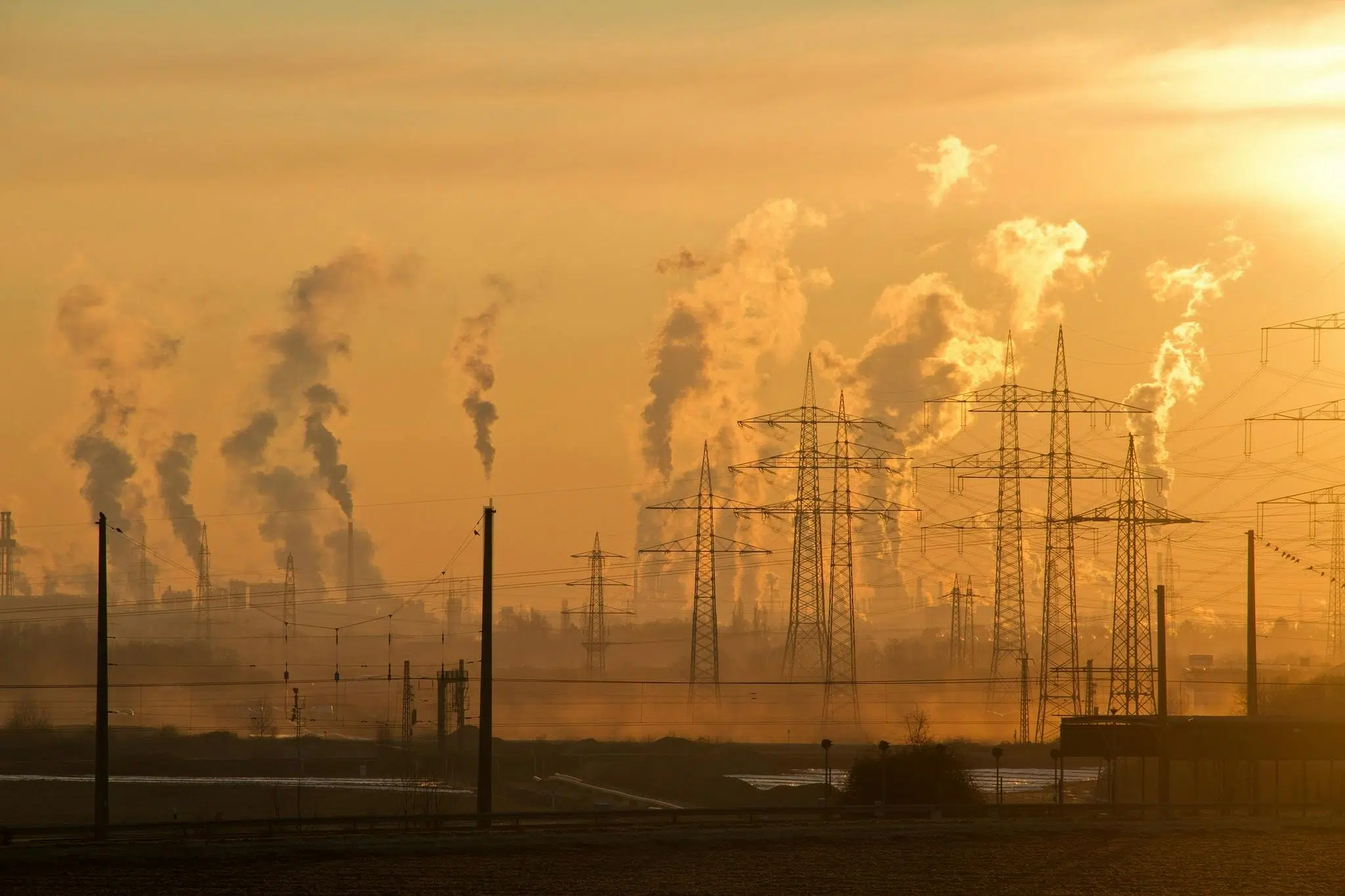
Image CreditLane V. Erickson ShutterStock

Fri, 2012-07-27 03:30Steve Horn
Steve Horn's picture

Exposed: Pennsylvania Act 13 Overturned by Commonwealth Court, Originally an ALEC Model Bill

On July 26, the Pennsylvania Commonwealth Court** ruled PA Act 13 unconstitutional.*** The bill would have stripped away local zoning laws, eliminated the legal concept of a Home Rule Charter, limited private property rights, and in the process, completely disempowered town, city, municipal and county governments, particularly when it comes to shale gas development.

The Court ruled that Act 13 "...violates substantive due process because it does not protect the interests of neighboring property owners from harm, alters the character of neighborhoods and makes irrational classifications – irrational because it requires municipalities to allow all zones, drilling operations and impoundments, gas compressor stations, storage and use of explosives in all zoning districts, and applies industrial criteria to restrictions on height of structures, screening and fencing, lighting and noise."

Act 13 -- pejoratively referred to as "the Nation's Worst Corporate Giveaway" by AlterNet reporter Steven Rosenfeld -- would have ended local democracy as we know it in Pennsylvania.

"It’s absolutely crushing of local self-government," Ben Price, project director for the Community Environmental Legal Defense Fund (CELDF), told Rosenfeld. "It’s a complete capitulation of the rights of the people and their right to self-government. They are handing it over to the industry to let them govern us. It is the corporate state. That is how we look at it."

Where could the idea for such a bill come from in the first place? Rosenfeld pointed to the oil and gas industry in his piece.

That's half of the answer. Pennsylvania is the epicenter of the ongoing fracking boom in the United States, and by and large, is a state seemingly bought off by the oil and gas industry.

The other half of the question left unanswered, though, is who do oil and gas industry lobbyists feed anti-democratic, state-level legislation to?

The answer, in a word: ALEC.

Fri, 2012-07-20 10:32Farron Cousins
Farron Cousins's picture

White House Wants Industry Help To Choose Which Regulations To Kill

When the Obama White House begins adopting the same talking points as the dirty energy industry, something has gone horribly wrong with our government. But that is exactly what is happening today, with the White House apparently buying into the repeatedly debunked industry talking point that claims that government regulations are killing jobs.

The White House has created a new page on their website – whitehouse.gov/advise – where they are asking businesses to tell the government which regulations are burdening their business so that the government can decide whether or not to kill that regulation.

Featured on the website is a video by Cass Sunstein, Administrator of the Office of Information and Regulatory Affairs, where he tells businesses that the White House will do what is necessary to do away with burdensome regulations in order to spur job growth.

Here’s the video:

Tue, 2012-07-17 01:08Steve Horn
Steve Horn's picture

Does Red Leaf's "EcoShale" Technology Greenwash Oil Shale Extraction?

At the Clinton Global Initiative in 2008, former Vice President Al Gore called the possibility of fossil fuel corporations extracting oil shale "utter insanity." 

Insanity, though, doesn't serve as a hinderance for deeply entrenched and powerful fossil fuel interests.

Oil shale, also known as kerogen, should not be confused with shale gas or shale oil, two fossil fuels best known from Josh Fox's "Gasland." As explained in a report by the Checks and Balances Project,

Oil shale itself is a misnomer. It is actually rock containing an organic substance called kerogen. The rocks haven’t been in the ground for enough time or under enough pressure to become oil. Oil companies need to recreate geological forces to produce any energy from it. Ideas for developing oil shale have included baking acres of land at 700 degrees for three to four years and even detonating an atomic bomb underground.

The really "insane" part of the equation: oil shale production, which has yet to begin, would be ecologically destructive to the extreme.

"Because oil shale is a rock, commercial production would release 25% to 75% more greenhouse gas emissions than conventional oil," wrote the Western Resource Advocates. Furthermore, like tar sands production and shale oil/gas production, oil shale production is a water-intensive process.

Adding insult to injury, in the 100 years of attempted commercial production of oil shale, the fossil fuel industry has yet to seal the deal, motivating an April 2012 report by Checks and Balances titled "A Century of Failure."

Wed, 2012-07-11 11:10Steve Horn
Steve Horn's picture

Wisconsin v. Yoder Redux? MN Amish Citizens Revolt Against Frac Sand Mining

"History," the old adage goes, "repeats itself." And this is precisely the reason why we learn it.

Exhibit A: Wisconsin v. Yoder (1972), a landmark First Amendment Court battle royale. The case's facts, as summarized by Oyez, are as follows:

Jonas Yoder and Wallace Miller, both members of the Old Order Amish religion, and Adin Yutzy, a member of the Conservative Amish Mennonite Church, were prosecuted under a Wisconsin law that required all children to attend public schools until age 16. The three parents refused to send their children to such schools after the eighth grade, arguing that high school attendance was contrary to their religious beliefs.

The Court was tasked to answer the following question: Did Wisconsin's requirement that all parents send their children to school at least until age 16 violate the First Amendment by criminalizing the conduct of parents who refused to send their children to school for religious reasons?

Wed, 2012-07-11 03:00Brendan DeMelle
Brendan DeMelle's picture

Science Trumped by Politics In Cuomo's NY Fracking Plans?

New York Governor Andrew Cuomo has said repeatedly that, in making the decision on whether to allow horizontal hydrofracking in New York State, he wants to rely on “science, and not emotion.” He is relying on the NY Department of Environmental Conservation (DEC) to give him that science - but an array of documents suggest the Governor is being badly served.

Documents recently uncovered by Environmental Working Group shine a unique spotlight on privileged access granted to gas industry lobbyists by DEC officials with regards to fracking.

Some of the most important conversations revealed in those pages have little to do with debate over the science of fracking’s environmental footprint – and everything to do with the politics of ending New York’s temporary moratorium and allowing shale gas fracking to move forward in the state.

Governor Andrew Cuomo has gone to great lengths to present the course his state will take with regards to fracking as the opposite of Pennsylvania’s drill-baby-drill approach, which has left regulators scrambling to keep up and allowed a growing list of problems to emerge. By contrast, New York will make an incremental, guarded entry into fracking, Cuomo alleges. And his regulators will take an approach that rises above the fray of conflicts between industry and environmentalists.

“We have a process. Let’s get the facts,” Governor Cuomo said last year, with regards to ending the state’s temporary moratorium on fracking. “Let the science and the facts make the determination, not emotion and not politics.”

But it’s increasingly clear that the process has actually been based on anything but science. Politics, legal considerations and economic concerns have instead predominated. Most tellingly, documents recently uncovered by Environmental Working Group show that industry representatives allowed access to drafts of the state’s permit plans, and used that information to lobby hard against testing for radioactivity in wastewater, for example.

But the documents also show a regular pattern of behind-the-scenes communication between the industry and regulators, at the same time as environmental advocates and others were struggling to be heard through public comments and similar official channels.

Tue, 2012-07-10 10:16Steve Horn
Steve Horn's picture

Oil Sands Fact Check: New API Front Group

How do you sell a rotten bag of goods? Rule number one of effective propaganda: repackage it into something seemingly less grotesque.

In that spirit, the Houston Chronicle recently reported the American Petroleum Institute (API) has created yet another front group, this one to promote tar sands crude, one of the dirtiest sources of fuel in the world, as a safe and secure energy resource.

It's name? "Oil Sands Fact Check" (OSFC).

Sat, 2012-07-07 08:00Farron Cousins
Farron Cousins's picture

What To Expect When You’re Electing: President Barack Obama

Part 3 in a series, see Part 1 and Part 2.

Perhaps more than any other sitting U.S. President, Barack Obama has been Commander in Chief through some of the most obvious examples of what climate change will do to America. The last few weeks alone have given us severe droughts in some areas of the country while others have seen unprecedented flooding; The state of Colorado is battling some of the worst wildfires in their history; and massive heat waves are engulfing large swaths of America. And let’s not forget the massive snowstorms in the winter of 2010 – 2011.

Then there were the manmade environmental atrocities like the BP oil geyser in the Gulf of Mexico, the deadly Massey Upper Big Branch mine disaster, the Kalamazoo River tar sands spill, fracking-induced earthquakes in Ohio, water contamination from unconventional oil and gas drilling – the list could go on and on.

So in the face of these disasters, how has President Obama fared on environmental issues? Let’s take a look.

In 2008, then-candidate Obama told supporters that if elected, he would set a goal of an 80% reduction in carbon emissions by the year 2050. He acknowledged that man-made climate change was a real threat to America, and signaled a change in policy from the previous administration. Voters, especially environmentally conscious voters, were relieved to finally hear a candidate expressing such bold goals for the country.
 

Fri, 2012-07-06 03:00Steve Horn
Steve Horn's picture

EOG Resources: The Gas Corporation That Does It All From Cradle to Grave

DeSmogBlog, on multiple occasions, has reported that the damage caused by hydraulic fracturing, or "fracking" in the unconventional oil and gas industry goes far beyond water contamination, put in the spotlight by the documentary film "Gasland." The multi-pronged harms were tackled in a comprehensive manner in our report, "Fracking the Future."

One corporation in particular, EOG Resources, epitomizes the shale gas lifecycle from cradle to grave and the damage it is causing in communities worldwide. 

Who is EOG? The Artist Formerly Known as Enron

EOG Resources -- owned by CEO Mark Papa -- is the born again sibling of the now disgraced corporation, Enron Oil and Gas, hence "EOG." It is headquarted in Houston, TX.

Former President and Chief Opearing Officer of Enron, Richard Kinder, recently referred to by The Wall Street Journal as "The Luckiest Ex-Enron Employee," now co-owns oil and gas industry pipeline giant, Kinder Morgan

After the fall of Enron, Kinder Morgan purchased Enron's pipeline assets and built up the Kinder Morgan behemoth into what it is today, the corporation with the most extensive array of pipelines in North America.

Tue, 2012-07-03 15:51Ben Jervey
Ben Jervey's picture

Bloomberg Stunner: How Chesapeake Energy Paid Less Than a 1% Tax Rate On $5.5 Billion in Profits

Chesapeake Energy, a company that is no stranger to financial scandals, has found itself on the front page of the financial papers again. This time, the subject is taxes. Or how Chesapeake barely pays them.  

Over its 23-year history, Chesapeake Energy, the second largest producer of natural gas in the U.S., and the company described by its founder and CEO Aubrey McClendon as “the biggest frackers in the world,” has earned roughly $5.5 billion in pre-tax profits. To date, the company has paid $53 million in taxes. That’s an effective tax rate of under 1 percent - a massive taxpayer subsidy.

The corporate income tax rate in the U.S. is 35 percent. 

The Bloomberg article that exposed these stunning figures is quick to note that this is far less than the 12 percent rate that GE paid in 2010 that caused such public outrage, and even a tiny percentage of the 18 percent effective rate that Google had to answer for.

So how does Chesapeake pull this off? Mostly, it’s due to a rule written in 1916 that allows oil and gas producers to, according to Bloomberg, “postpone income taxes in recognition of the inherent risk of drilling wells that may turn out to be dry.

The break may be outdated for companies such as Chesapeake, which, thanks to advances in technology, struck oil or gas in 99.6 percent of its wells last year.“ When the policy was written, drillers struck “dry wells” roughly 80 percent of the time.

Pages

Subscribe to fracking