Jack Gerard

Tue, 2013-01-22 12:52Carol Linnitt
Carol Linnitt's picture

Oil Change International: The Coal Hiding in the Tar Sands

Thanks to Alberta's tar sands, coal-powered energy production just got cheaper, and dirtier.

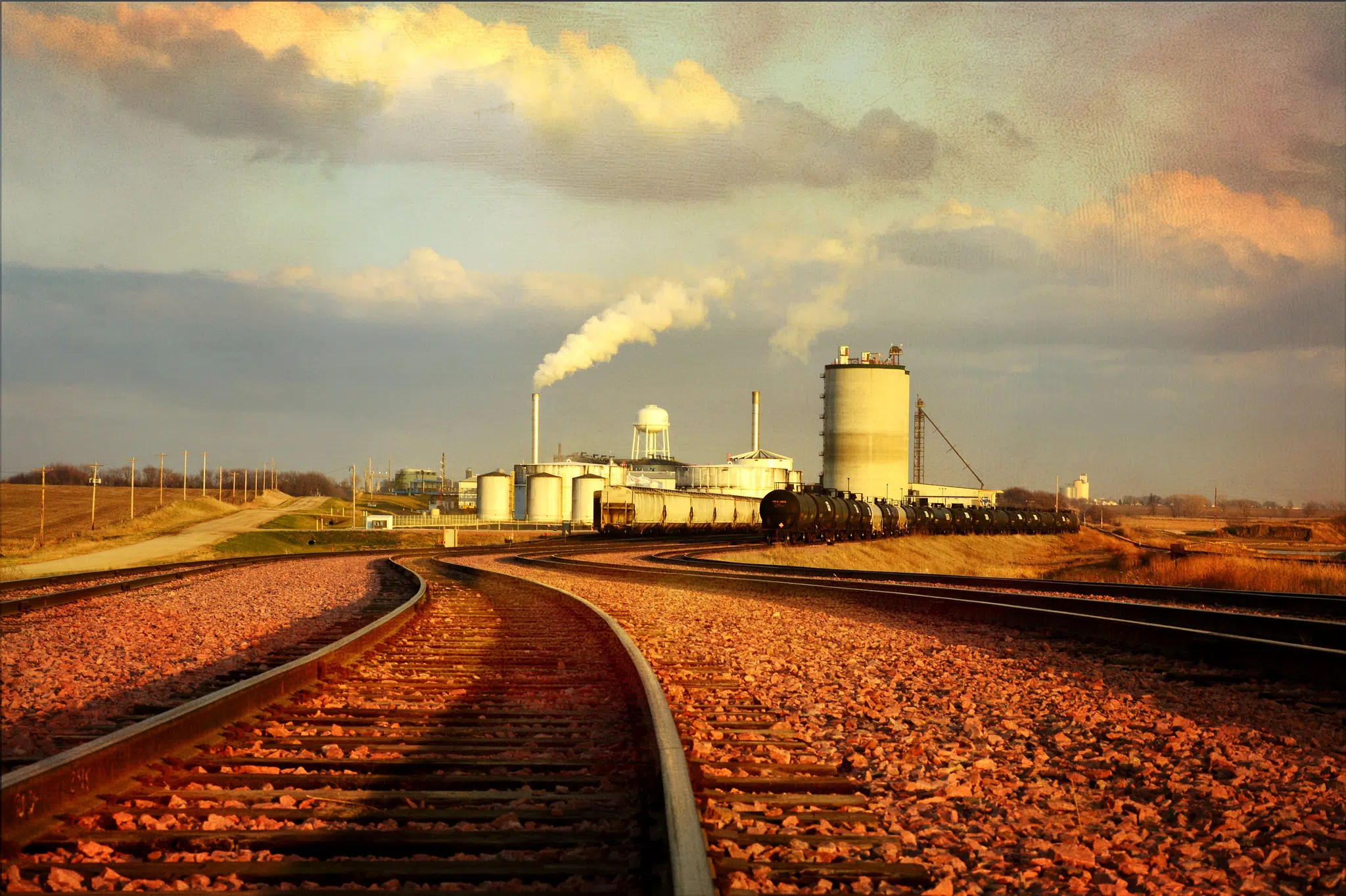
That is largely due to an often overlooked byproduct of bitumen upgrading: petroleum coke. The byproduct, commonly referred to as petcoke, is derived from the excess heavy hydrocarbons necessarily processed out of bitumen in the production of lighter liquid fuels like gasoline and diesel. The leftover condensed byproduct, petcoke, bears a striking resemblance to coal, and is being integrated into coal power plants across the US and internationally, contributing a tremendous amount of carbon emissions to the tar sands price tag that has been previously unaccounted for.

That is, until the research group Oil Change International released a research report that calculates the use of petcoke in American energy generation increases the proposed Keystone XL Pipeline's emissions by a staggering 13 percent. 

Wed, 2013-01-09 10:47Farron Cousins
Farron Cousins's picture

Dirty Energy Lobby Optimistic About Obama’s Second Term

Despite the years that they have spent attacking President Obama, the dirty energy industry is incredibly optimistic that the White House is going to give the oil and gas industry everything they want in Obama's second term.

Jack Gerard, president of the American Petroleum Institute (API), said that his group is confident that the Obama administration’s second term will turn into a boom for the natural gas industry.  As we’ve pointed out in the past, Gerard’s vision for America is to have a dirty energy lobbyist strategically placed in every district in the country.

The Hill has the latest from Gerard:

Thu, 2012-08-02 13:09Farron Cousins
Farron Cousins's picture

What To Expect When You’re Electing: Mitt Romney’s Energy Advisors

In the last few months, the press has been drawing a lot of parallels between presumptive Republican presidential nominee Mitt Romney and former Republican President George W. Bush. And they have plenty of reasons for doing so. Romney has already tapped many of the same Bush economic and foreign policy advisers, and rumors were swirling earlier this year that Romney would tap Bush’s energy advisers as well.

As it turns out, those rumors are true.

Climate Progress has compiled a list of people who have been tapped, or will likely be tapped, by Romney for his energy team. The roster is a virtual “Dream Team” of dirty energy industry representatives from the coal industry, the shale gas industry, the oil industry, mountaintop removal mining companies, and lobbyists - all of whom were close advisers and friends of George W. Bush.

The most terrifying name on the list is American Petroleum Institute president Jack Gerard. Climate Progress points out that Gerard has been a longtime supporter of Romney, and that Romney considers Gerard a close, personal friend. Gerard’s stated goals, goals that we have to assume he’ll pressure Romney to fulfill, include placing an oil lobbyist in every district in America, opening up all federal lands for oil drilling, and removing many existing safety regulations.

Sat, 2012-05-26 08:00Farron Cousins
Farron Cousins's picture

Is Your Water Bottle Giving You Cancer? New Study Reveals Shocking BPA Dangers

Bisphenol A, or BPA for short, has been in the spotlight for decades, with both the chemical industry and occasionally the federal government touting its safety, while independent, non-industry funded scientific studies show us how dangerous the chemical truly is. The latest news regarding BPA is no different, with new independent studies showing that the common chemical has the potential to increase the risk of breast cancer when exposure occurs in the womb.

BPA is a common chemical used primarily in the production of plastics, such as baby bottles, canned goods (lining the inside of cans), soda bottles, and other common plastic goods that typically hold food or beverages (although it is found in countless other polycarbonate plastic products, including medical devices). It helps preserve the life of perishable goods, but comes at a dangerous cost to human health.

The chemical easily leaches out of plastic, and is either consumed by humans, or it can be absorbed through the skin. Estimates show that in the U.S., humans consume about 50 micrograms per kilogram of body weight everyday. The Centers for Disease Control (CDC) estimates that, at any given time, 93% of Americans have measurable amounts of BPA in their systems.

The latest study, released earlier this month, shows that in utero exposure to BPA in rhesus monkeys led to abnormalities in mammary gland development.

Fri, 2012-01-27 18:40Brendan DeMelle
Brendan DeMelle's picture

Greenpeace Calls On SEC To Investigate TransCanada’s Inflated Jobs Claims

Greenpeace USA President Phil Radford sent a formal complaint this week to the Securities and Exchange Commission (SEC) calling for an investigation into TransCanada’s use of wildly inflated jobs figures in promoting its application to build the Keystone XL tar sands pipeline. The letter asks the SEC to review the false and misleading claims made by TransCanada on a number of matters related to the pipeline. Greenpeace recieved confirmation from the SEC that the complaint had been referred to its Division of Enforcement.

Although President Obama rejected the company’s first proposal to build the Keystone XL tar sands pipeline, industry-friendly Republicans continue to push for its construction, often citing vastly inflated jobs figures. The Perryman Report commissioned by TransCanada is the source of much of the bogus pipeline jobs information. 

Despite the fact that the State Department and independent reviews definitively debunked the claims to “20,000 jobs” and even “hundreds of thousands of jobs” tied to the Keystone XL project, the lie lives on like a zombie, parroted by the echo chamber led by the U.S. Chamber of Commerce, API’s Jack Gerard, and of course Mitt Romney and the GOP.

This lie must be stopped or it will continue to contaminate the public discourse.


The Greenpeace SEC letter [PDF] states:

Sun, 2012-01-22 18:15Guest
Guest's picture

American Petroleum Institute's Jack Gerard Fact Checked By Activists During Speech

Guest post by Connor Gibson, cross-posted from Polluterwatch.

Two days ago, President Obama denied the permit for the destructive Keystone XL tar sands pipeline, much to the dismay of Big Oil's top lobbyist and propagandist. Speaking at the National Press Club to an audience dominated by oil, coal and nuclear representatives and lobbyists, American Petroleum Institute (API) president Jack Gerard continued to lash out at President Obama over the pipeline decision. However, activists attending their event fact checked Jack's big oil talking points.

Shortly after asking the president, "what are you thinking?!" a group of activists stood and delivered a call-and-response "fact check" over Gerard's speech -- see the full Fact Check video. After the event, PolluterWatch's Connor Gibson approached Jack Gerard on camera and repeatedly asked him how much the American Petroleum Institute (API) is spending on its new "Vote 4 Energy" advertising campaign (which, as Mr. Gerard has absurdly claimed, is "not an advertising campaign"). Jack refused to answer:

Vote 4 Energy, which was mocked by a parody commercial during its public release, is the American Petroleum Institute's newest money dump to pretend that most Americans support politicians who represent Big Oil more than their own constituents. Wrapping its talking points in patriotic rhetoric, API's real intent is to continue getting billions of taxpayer dollars each year to corporations like ExxonMobil, Shell and Chevron, which rank among the most profitable companies in the world

Wed, 2012-01-04 18:36Brendan DeMelle
Brendan DeMelle's picture

API’s New ‘Vote 4 Energy’ Ad Campaign Is Thinly Veiled Election Year Bullying

American Petroleum Institute President Jack Gerard today announced the oil and gas industry’s latest election-year scare campaign to threaten the demise of the U.S. economy unless Big Oil gets its every wish in Washington. This year the wish list includes approval of the Keystone XL pipeline, expanded offshore drilling on both coasts, opening up the Arctic National Wildlife Refuge and more federal lands in the West to drilling, and smaller buffer zones between drilling operations and drinking water supplies.

What if Washington doesn’t comply by delivering Keystone XL and the rest of the wish list? Gerard, the oil industry’s chief bully, threatens “huge political consequences” for Barack Obama. 

You can almost set your watch to this industry’s tired plays on this front. If it’s January of a presidential election year, it must be time for the oil industry to threaten Washington politicians to ensure they continue to do the industry’s bidding. The threats are delivered in the form of outlandishly expensive advertising campaigns and punditry tours, aided by a captive media that serves its role as stenographer for the industry’s inflated jobs figures and misleading claims.

The API campaign is nothing more than a fresh skin on a very old and stale argument – that President ______ (insert current name) needs to continue opening up more of the nation’s lands, particularly public lands, for oil and gas drilling, OR ELSE ______(insert latest political talking point), in this case “jobs jobs jobs” will be lost (a bogus argument)

CNN notes the close correlation between API’s target states and some of the hottest states in the 2012 U.S. elections – hint: they’re the same.

"When's the last time someone got hired to clean up a solar spill?" asks an actor playing an ordinary American in the Greenpeace spoof. "Oh no, I've got sunlight all over me."

Touché!

Greenpeace said in a statement:

"The Vote 4 Energy campaign is the latest effort by the oil industry to fake citizen support for its agenda. The American Petroleum Institute has repeatedly spent millions to block clean energy solutions and fake grassroots support for Big Oil."

While API says its new ads are designed to feature only “ordinary Americans” expressing their thoughts on energy, in reality the industry's ad agency carefully handpicks people to read from a script. In other words, it is pure astroturfing.

Recall that API ad producers kicked out several people who wouldn’t agree to read the script provided by API, and instead insisted on expressing their own beliefs, as they had been led to believe they could by the API ad team’s outreach ad, which stated:

… “the ONLY qualifications” listed on the e-mail: “You are willing to go on camera and state your beliefs.”
Another is: “You are comfortable portraying YOURSELF! They want REAL PEOPLE not Actors!”

API won’t reveal how much money it is spending on the astroturf ad campaigns that will continue throughout this election year.  But it will likely rival or surpass what API spent on its 2010 election year ads – roughly $40 million

That’s a lot of job-creating money! Too bad it’s going into bullying ads instead of supporting “ordinary Americans” who need work.

Wed, 2011-07-06 13:38Farron Cousins
Farron Cousins's picture

American Petroleum Institute Dreams Of Placing Lobbyists In Every District

Oil industry lobbyist and president of the American Petroleum Institute (API) Jack Gerard made his industry's goal clear in a recent interview with Fortune Magazine. Mr. Gerard said he hopes that in the near future there will be an oil lobbyist on the ground in every U.S. Congressional district in order to help his industry flourish, "so when a policy proposal hits the industry's bottom line, lawmakers from Seattle to Savannah will hear complaints about it from voters back home.”

As API president, Mr. Gerard is the leading representative for more than 400 different oil and gas companies. Gerard took the helm of API in November 2008, leaving a lucrative post as the head of the American Chemistry Council. In the short time that Gerard has led the API, he has instituted numerous reforms to help the oil industry focus its messaging to change public attitudes towards the industry’s behavior.

One of the major tools that Gerard brings to the API is the use of astroturf “grassroots” operations, something that the oil industry had not yet capitalized on.

Wed, 2010-07-14 16:03Brendan DeMelle
Brendan DeMelle's picture

American Petroleum Institute's Revisionist History on Climate Change Position

The American Petroleum Institute, the trade group for the oil and natural gas industry, is trying to re-write history by claiming that it has remained "neutral" about U.S. climate legislation.

Nothing could be further from the truth, actually.

API orchestrated the entire "Energy Citizens" astroturf campaign last year precisely to fight against climate legislation. Greenpeace USA obtained an internal memo[PDF] from the desk of API president Jack Gerard detailing polluting interests' plans to launch the nationwide astroturf campaign attacking climate legislation as "tax increases on our industry."

The API memo requested API's member companies to recruit employees, retirees, vendors and contractors to attend the "Energy Citizen" rallies in key Congressional districts nationwide during the August recess last year, no doubt hoping to be confused with a genuine grassroots uprising, much like the tea parties.

In fact, the API memo confirms that it would be funding and staffing the whole highly-orchestrated campaign:

To be clear, API will provide the up-front resources to ensure logistical issues do not become a problem. This includes contracting with a highly experienced events management company that has produced successful rallies for presidential campaigns, corporations and interest groups. It also includes coordination with the other interests who share our views on the issues, providing a field coordinator in each state, conducting a comprehensive communications and advocacy activation plan for each state, and serving as central manager for all events.

Fast-forward to yesterday, when Anne Mulkern of E&E's Greenwire (syndicated by the New York Times) reported on comments made by API spokeswoman Cathy Landry:

Landry said API has not been among those calling climate legislation a national energy tax. API has not come out in opposition to any of the Senate climate bills, saying that it is "neutral."

Subscribe to Jack Gerard