Sierra Club

Tue, 2012-03-27 17:16Brendan DeMelle
Brendan DeMelle's picture

Sierra Club Launches "Mr. Coal" Video Campaign to Mock Dirty Coal PR

The Sierra Club launched a funny new "Mr. Coal" video campaign this week in its ongoing 'Beyond Coal' effort to shut down coal plants throughout the United States.

The campaign will feature a steady stream of satirical TV commercials mocking the coal industry's incessant and incredulous claims about job creation, "clean coal," and many other dirty PR tricks pitched by King Coal time and time again.

Feast your eyes on one of the ads below:

The Club has teamed up with Mekanism, a San Francisco, CA-based creative campaign agency, to push out these commercials.

Sat, 2011-12-10 07:15Farron Cousins
Farron Cousins's picture

North American Air Pollution Statistics Will Take Your Breath Away

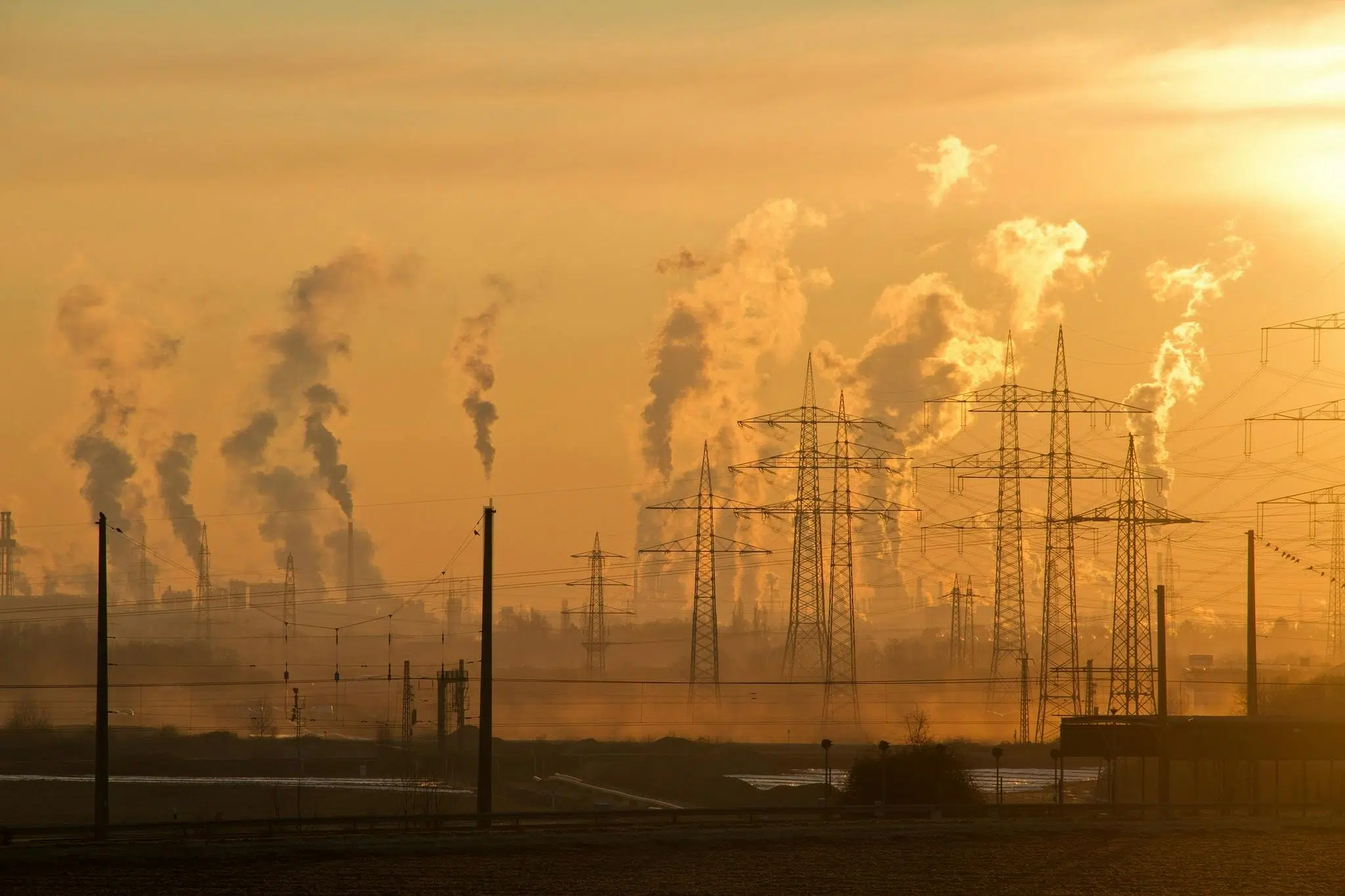
Two separate reports released this week offer a grim look at the state of air quality in North America. The continent already produces 6% of the world’s greenhouse gas (GHG) emissions from power plants, resulting in an array of health and environmental problems.

According to a joint report by the Environmental Integrity Project (EIP), EarthJustice, and the Sierra Club, the situation in America is getting worse. Their report rated the top 5 worst states for toxic power plant emissions. Some of the chemicals used to rank the states’ emission status included chromium, arsenic, lead, and mercury. These represent four of the most toxic heavy metals found in power plant emissions.

The report, titled "AMERICA’S TOP POWER PLANT TOXIC AIR POLLUTERS" listed the 5 worst states as follows:

Pennsylvania (#1 rankings for arsenic and lead)
Ohio (#2 rankings for mercury and selenium)
Indiana (#4 rankings for chromium and nickel)
Kentucky (#2 for arsenic)
Texas (#1 rankings for mercury and selenium)

This report comes as the U.S. EPA is working on new standards for power plant emissions. The agency is under a court order to establish new emission standards, but action on air pollution standards has stalled, thanks to an attempt by the Republican-controlled Congress to strip the EPA of their court-granted authority to regulate air pollution.

Mon, 2011-11-28 17:39Laurel Whitney
Laurel Whitney's picture

Are New York Lawmakers Poised To Throw Upstate Residents Under The Fracking Bus?

Despite last week’s temporary win protecting the Delaware River Basin and its inhabitants from natural gas fracking, the debate rages on in New York State. Lawmakers, industry lobbyists and concerned landowners have debated for over a year about whether or not to open up the state to the Marcellus Shale fracking bonanza.

New York Governor Andrew Cuomo’s stated commitment to vote no in the Delaware River Basin vote was promising, but it is offset by the fact that he has assembled a secretive 18-person “fracking panel” which Food & Water Watch executive director Wenonah Hauter recently alleged is comprised of many “strongly self-interested and industry-biased” individuals. Some environmental groups are concerned that this panel seems rigged to give the green light to fracking in New York.


At previous public hearings, tensions have already run high with both supporters and opponents lining up hours beforehand to ensure their turn to speak out on this highly contentious issue.


Most of the proponents of gas fracking continue to argue the economic mantra of job creation and domestic energy security, even though multiple reviews have debunked the gas industry’s lofty job projections. Food & Water Watch released a report indicating that many of the jobs created would likely be short-term and favor contract workers from outside the state. Other watchdogs of industry rhetoric, including Senator Ron Wyden (D-OR), point out that the industry's rush to export gas from the fracking boom will lead to much higher gas prices for Americans, contradicting the industry's alleged commitment to domestic energy security.

There are also important questions about just how much gas there is underneath New York to warrant such extreme energy development.  After a recalculation of the resource potential of the area, geologists at the U.S. Geological Survey dropped their estimate of the recoverable gas by a quarter. They determined that the amount of reasonably recoverable gas would only meet US demand for four years instead of sixteen.

Mon, 2011-08-01 12:16TJ Scolnick
TJ Scolnick's picture

In Gas Driller’s Canadian East Coast Heartland, A Day Of FRACtion

On August 1st and 2nd, a Day of FRACtion involving marches and protests is taking place across most of Canada’s Atlantic provinces in order to bring attention to unconventional gas extraction and its highly contentious hydraulic fracturing (fracking) drilling method.

The Sierra Club Atlantic Chapter, in partnership with a number of other organizations in New Brunswick, Nova Scotia and Prince Edward Island opposed to gas production, is calling on all Atlantic Canadians to send their leaders the message that “We do not want fracking in Atlantic Canada” (or anywhere).

Mon, 2011-04-11 16:32TJ Scolnick
TJ Scolnick's picture

Gas Industry Spent Record Amount Of Money Lobbying To End New York Fracking Moratorium

New York is a hot spot to watch in the controversy over  gas drilling and hydraulic fracturing (a.k.a. fracking), which the state placed a temporary ban on last year. A new report [PDF] from Common Cause/New York shows the historic levels of money dirty energy companies are spending to promote gas drilling and to overturn New York state’s ban on fracking.

In the state’s last legislative session, more than thirty gas-related bills aiming to create panels, commissions and task forces were proposed in order to investigate a wide range issues ranging from environmental impacts to economics, as well as two fracking moratorium proposals.

Notably, last August, the state Senate voted 48-9 in favour of S8129B which prevents the Department of Environmental Conservation (DEC) from issuing fracking permits until the Supplemental Generic Environmental Impact Statement (SGEIS) evaluating shale gas drilling has been finalized. The bill easily passed the Assembly 93-43 late November 2010. However, on December 13, 2010, Governor David Paterson vetoed the legislation, instead issuing an Executive Order prohibiting fracking of horizontally drilled wells until about July 1, 2011. In February, the state announced plans to put fracking rules in place by June in order to green-light the controversial practice just as the ban runs out.

In terms of lobbyist spending, the Common Cause/NY report shows that the dirty energy companies and industry front groups fighting against the moratorium on fracking outspend environmental organizations and others supporting the ban by a margin of 4:1.

Sun, 2011-03-13 16:11TJ Scolnick
TJ Scolnick's picture

Fracking Banned In New Jersey

On Friday, New Jersey legislators unanimously voted for S-2576, a bill which prohibits hydraulic fracturing (a.k.a. fracking) for natural gas in the state.

S-2576 is largely symbolic since New Jersey does not use fracking to drill for natural gas. This bill does, however, send a clear message to the industry as well as neighbouring states looking to tap into the Marcellus Shale formation which reaches into New York, Pennsylvania, Ohio, West Virginia and northwestern N.J.

Thu, 2011-03-10 03:45TJ Scolnick
TJ Scolnick's picture

Upton’s Upcoming Pipeline Safety Legislation Is Next Favor To Koch Brothers

Rep. Fred Upton (R-MI) this week revealed that he is preparing legislation and hearings on improving pipeline safety. In reality, he’s just solidifying his support of the proposed TransCanada Keystone XL pipeline, a boondoggle for the Koch brothers who control nearly 25% of the dirty tar sands oil already entering the U.S. from Canada. Koch Industries is poised to grab an even bigger share of that figure if the Keystone XL pipeline is built, sending more dirty tar sands to Gulf Coast refineries – if it doesn’t leak out along the way, that is.

Although Upton's House Energy and Commerce Committee “does not have primary jurisdiction over the nation's 2.3 million miles of hazardous liquids pipelines,” Ed Sackley, Upton’s district representative said that Upton will likely hold hearings anyway and "move something in the 112th Congress."

Thu, 2011-02-03 18:16Emma Pullman
Emma Pullman's picture

Breaking: Purdue University Cancels Coal Project Thanks To Student Pressure

Today, Purdue University students, community members, faculty, alumni and staff breathed a sigh of relief as the Board of Trustees voted to nix plans to build a new coal boiler on campus.  For nearly a year, a broad coalition including Campuses Beyond Coal fought the university's plans to build a new coal boiler on campus, and today their hard work paid off. 

Prior to today's cancellation, Purdue was the only university in the United States that still planned to expand its coal power plant.  While school officials touted the upgrade as "green", students, activists and community members weren't convinced.  They feared that University officials were keen to cling to the "coal is clean" myth while other universities were leading the shift to cleaner power sources. (The coal industry cooked up the "clean coal" myth and continues trying to convince the public through a $40 million astroturf advertising and PR campaign by organizations like the "American Coalition for Clean Coal Electricity".  But the public, especially young people, are seeing right through the industry's propaganda.)

Purdue was initially hesitant to revisit its plans.  But effective grassroots organizers at the university and in the community hosted protests, rallies, and several events to convince the school to move away from its reliance on dirty coal.  

Tue, 2011-01-18 15:43TJ Scolnick
TJ Scolnick's picture

West Virginia Politicians Vow To Fight Dirty On Coal, While EPA Enforces Laws To Protect Appalachian Residents

Dirty coal and climate denial are hot topics in West Virginia right now.  Last week, acting Governor Earl Ray Tomblin (D-WV) delivered West Virginia’s State of the State address where he gave a spirited defence of “carbon friendly” coal.  Then the very next day the Environmental Protection Agency (EPA) stole the spotlight by vetoing what would have been the largest mountaintop removal project in the state.

Tomblin, who replaces former Governor and newly minted Senator Joe Manchin (D-WV), emphasized his support for the expanded use of coal as a vital part of the nation’s energy mix.  He also vowed to aggressively pursue West Virginia’s lawsuit against EPA until a more “sensible” approach can be found to regulate coal’s global warming emissions.

Governor Tomblin’s comments do not break new ground and will tie West Virginia to coal despite the fact that the industry negatively impacts the state’s economy.  His counterparts Senators Jay Rockefeller (D-WV) and the aforementioned Joe Manchin are already well known for frequently overlooking the negative impacts of coal.

Fri, 2010-12-10 11:10Bill Hewitt
Bill Hewitt's picture

PART TWO: The Paradox of Canada’s Tar Sands and America’s Drive to Substantially Decarbonize Energy

(Cont'd from Part 1) As far as the credibility of the U.S. and Canada in international climate negotiations, the Sierra Club’s Kate Colarulli thinks that continued tar sands oil production and consumption hurts both countries badly.  Canada’s reputation is particularly poor in this context.

Susan Casey-Lefkowitz, the director of the Natural Resources Defense Council’s International Program, feels the same way.  Canada, in her view, has been completely discredited at the table as a direct consequence of the tar sands.

In Cancún, Canada has been an extremely visible target because of the tar sands.  Protesters there have made the salient point that Canada is dragging its feet on robust greenhouse gas reduction targets because of their desire to continue and radically expand the tar sands extraction.

Canada was also being tarred in Cancún – pun intended – by being the recipient of three “Fossil of the Day” awards, as voted by over 400 international organizations.  Canada was similarly dishonored at the Copenhagen Conference of the Parties for “…years of delay, obstruction and total inaction.”

Pages

Subscribe to Sierra Club