

A recent essay says the most pressing current scientific and political challenge is to avoid what is known as “dangerous” global warming – the point where world temperatures become irreversible.
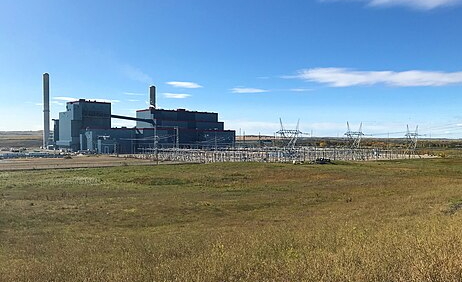
As there’s a 25-to-30-year lag between greenhouse emissions and the full impact of their warming, current climate chaos is a result of carbon spewed in the late 1970s. The hit from more recent discharges – including China’s coal plants – is but pain yet to come.
So we’re dangerously close already.
Human activity currently generates 7.2 billion tons of carbon, or about 26.4 billion tons of carbon dioxide a year from fossil fuels, according to the Fourth Assessment Report of the UN’s Intergovernmental Panel on Climate Change.
While transport is one of the fastest growing culprits, it accounts for only 14% of CO2 and other emissions from human activity. Other major sources are electrical power (28.5%), deforestation (18%), industry (14%), and agriculture (14%).
Paul Brown, in Global Warming: The Last Chance for Change , says we are already committed to a further 0.7 degrees C, which would add up to 1.5 degrees C above pre-industrial levels. At that point 18% of the world’s species will die, and 400 million more people worldwide will be threatened by flooding.
It gets worse. As Earth warms, “feedbacks” occur. As Arctic ice melts, there will be less to reflect heat, warming further, melting more, and so on. Were Earth to get roughly 2 degrees warmer than pre-Industrial times, melting polar ice could become irreversible with global warming surpassing the human capacity to control the process. There is a fair chance of reaching 2 degrees if greenhouse gases are allowed to build up to roughly 450 ppm of CO2, just 75 more units.
Some say we have barely 20 years to prevent dangerous global warming. The Stern Review puts the date at 2035, while James Hansen of NASA’s Goddard Institute for Space Studies has said we have until 2015.
Given the magnitude of the problem, there is a very short time available to arrest it. It’s crucial for the U.S. and Canada to stop waiting for China and India to blink, and go ahead and impose mandatory emissions caps. China and India should do the same.
Subscribe to our newsletter
Stay up to date with DeSmog news and alerts