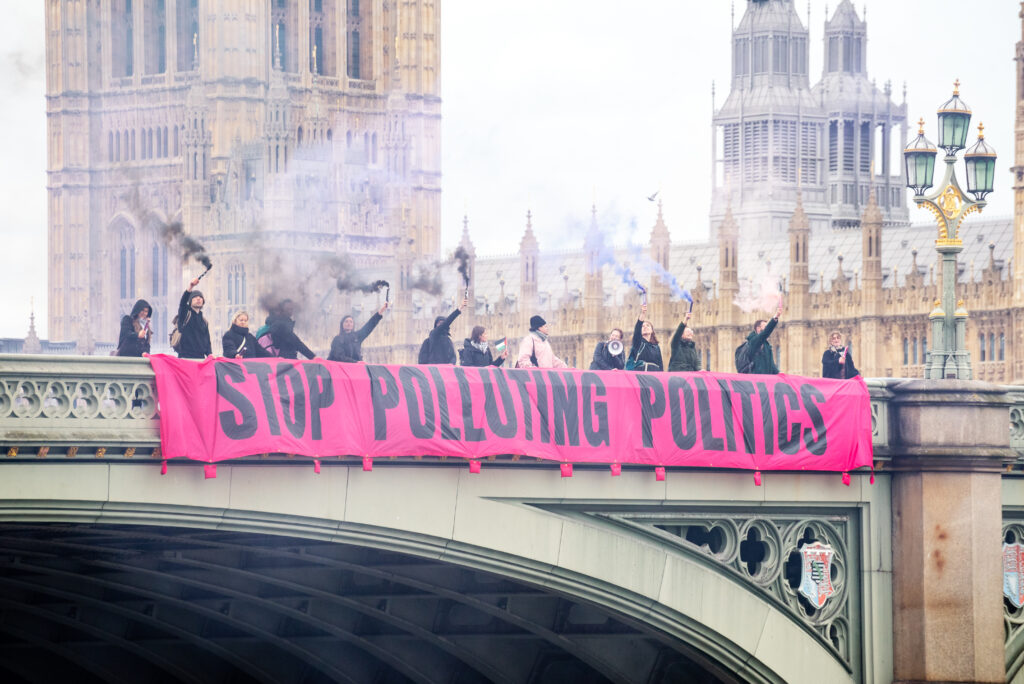

Democracy is utterly dependent upon an electorate that is accurately informed. In promoting climate change denial (and often denying their responsibility for doing so) industry has done more than endanger the environment. It has undermined democracy.
There is a vast difference between putting forth a point of view, honestly held, and intentionally sowing the seeds of confusion. Free speech does not include the right to deceive. Deception is not a point of view. And the right to disagree does not include a right to intentionally subvert the public awareness.
Although all public relations professionals are bound by a duty to not knowingly mislead the public, some have executed comprehensive campaigns of misinformation on behalf of industry clients on issues ranging from tobacco and asbestos to seat belts.
Lately, these fringe players have turned their efforts to creating confusion about climate change. This PR campaign could not be accomplished without the compliance of media as well as the assent and participation of leaders in government and business.
In the article itself it says "The amount of carbon taken up by North America had not been closely studied, and some reports even suggested that enough was being absorbed to balance emissions, King said."
Other than nutjobs like Peter Huber ("America, the beautiful carbon sink" & "Given the choice, the wilderness will also take an SUV over a bicycle..."), I was not really aware of reports suggesting that N.A. was in balanced emissions... pointers?
When I read the article I come across the point that this hadn't been well-studied before ("This is the first net carbon report for the region, said Tony King"). So, where did those other "reports" get information that things were balanced? I suspect it was wishful thinking -- I can kind of remember it being discussed with respect to sinks being included in the Kyoto calculus. Those lobbying efforts failed and natural sinks weren't included, so there hasn't been much focus on it. My other reading on the issue suggests that estimates of CO2 production, minus the amount in the air and amount in the sea, leaves a difference that can be concluded as terestrial up-take.
http://www.realclimate.org/index.php/archives/2007/11/is-the-ocean-carbon-sink-sinking/#comment-64173
Lots of work has been done on this recently and I expect we'll see better answers in the near future. I think it's important, however, to recognize that the recent work is much, much better than what we had before.